
Quick Summary
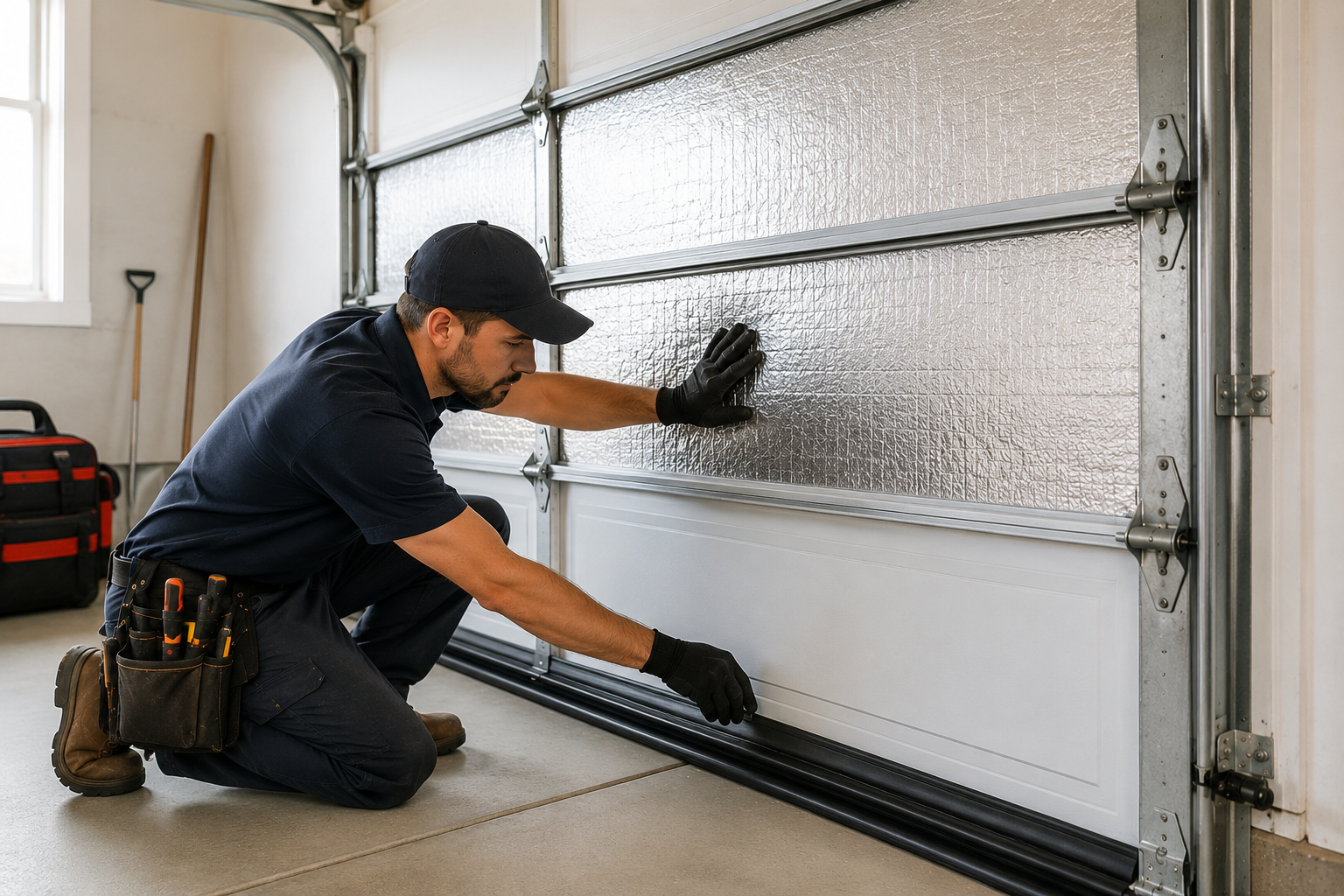
- Insulation of a garage door will help reduce heat loss and enhance comfort.
- Foam board and reflective insulation are some of the most effective insulators for a garage door.
- Weatherproofing is just as essential to consider as insulation panels.
- The price range of a do-it-yourself garage door insulation project is $100-$300.
- An insulated double garage door replacement will cost between $1,200-$4,000.
- An insulated garage door will provide noise reduction and greater energy efficiency.
- Attached garages stand to gain the most from garage door insulation.
While many homeowners concern themselves with windows and insulation in the attic when it comes to saving money on energy, there’s one element that people tend to forget, and that’s the garage door. If it’s not insulated, the door will let outdoor temperatures enter the garage, influencing the surrounding areas.
Insulation of the garage door is among the fastest and easiest things that you can do in order to improve efficiency and comfort at home. You will be able to save money on electricity every month. Moreover, the process is also useful when it comes to noise reduction and winter operation of the garage.
If you’re experiencing problems with drafts, noisy doors, or temperature changes, hiring a professional for Garage Door Weatherproofing & Insulation can be a huge help to your property.
What you’ll find in this guide:
-Why you should insulate a garage door
-Which are the best insulating materials
-How to insulate the door
-What insulation costs
-Will insulation really lower energy bills?
-Common mistakes to avoid
Why Should You Insulate Your Garage Door?
Insulating your garage door prevents any heat loss from outside to your garage. Consequently, without proper insulation, your garage doors made out of metals will easily catch the temperature from outside.
Some reasons to insulate a garage door include:
-For attached garages
-For garage doors that are under living rooms
-Gym rooms or workshops
-Areas with extremely hot or cold weather

Advantages of Insulating Garage Doors
Energy Saving
The primary reason why homeowners insulate their garage doors is because of energy bills savings.
Insulation reduces pressure on your HVAC system by regulating temperature around your wall and rooms close to it.
The U.S. Department of Energy reports that sealing gaps and adding insulation increases energy efficiency within a house. For further tips on saving energy, refer to the U.S. Department of Energy Insulation Guide.
Improved Indoor Environment
Insulating your garage will result in an increased level of comfort throughout the year, which is very important if you use your garage as:
-A work place
-A gym
-A laundry room
-Storage facility
Noise Reduction
The insulation of garage doors helps to minimize vibrations and any external noises.
Along with proper maintenance and efficient functioning, such an insulation can assist in creating less noisy movements of your garage door. People who face noisy operation of their garage doors can even avail the services of Garage Door Repair.
Increased Durability
Certain types of insulation make the door more rigid which helps reduce vibration and damage over time.
The best way to insulate a garage door depends on:
-Climate
-Budget
-Type of garage door
-Desired insulation performance
Garage Door Insulation Materials
| Material | Best For | Advantages | Drawbacks |
| Foam Board Panels | Most homes | Lightweight, high R-value | Requires cutting |
| Reflective Foil | Hot climates | Reflects radiant heat | Lower cold-weather performance |
| Fiberglass Batt | Detached garages | Affordable | Can sag or absorb moisture |
| Spray Foam | Professional projects | Excellent sealing | More expensive |
Foam Board Insulation
The most effective type of insulation used on garage doors is foam board. It is also an effective type of insulation material for sectional garage doors.
Advantages include:
-High R-value
-Water resistant
-Low weight
-Simple to install
Common materials include:
-Polystyrene
-Polyisocyanurate (Polyiso)
Reflective Insulation
Reflective insulation works better in places with hot weather since radiant heat is the major concern there.
This type of insulation prevents sunlight from entering the garage and helps prevent the accumulation of heat within it.
Fiberglass Insulation
Fiberglass insulation is affordable but heavier compared to foam board insulation.
The increased weight can affect:
-Garage door balance
-Performance of the opener
-Tension of the springs
Hence, if you have a hard time opening your garage door, it is advised that you schedule a Garage Door Safety Inspection prior to the installation of fiberglass insulation.
How to Insulate a Garage Door Step by Step
Most of the time, insulating your garage door isn’t difficult even with homeowners who have DIY skills. Nevertheless, stay away from the springs, cables, and tracks since they are under high tension and may lead to serious injury.
Things You Will Need
-Foam board insulation sheets
-Tape measure
-Utility knife
-Ruler
-Insulation adhesive/retention clips
-Weather stripping
-Gloves
-Safety goggles
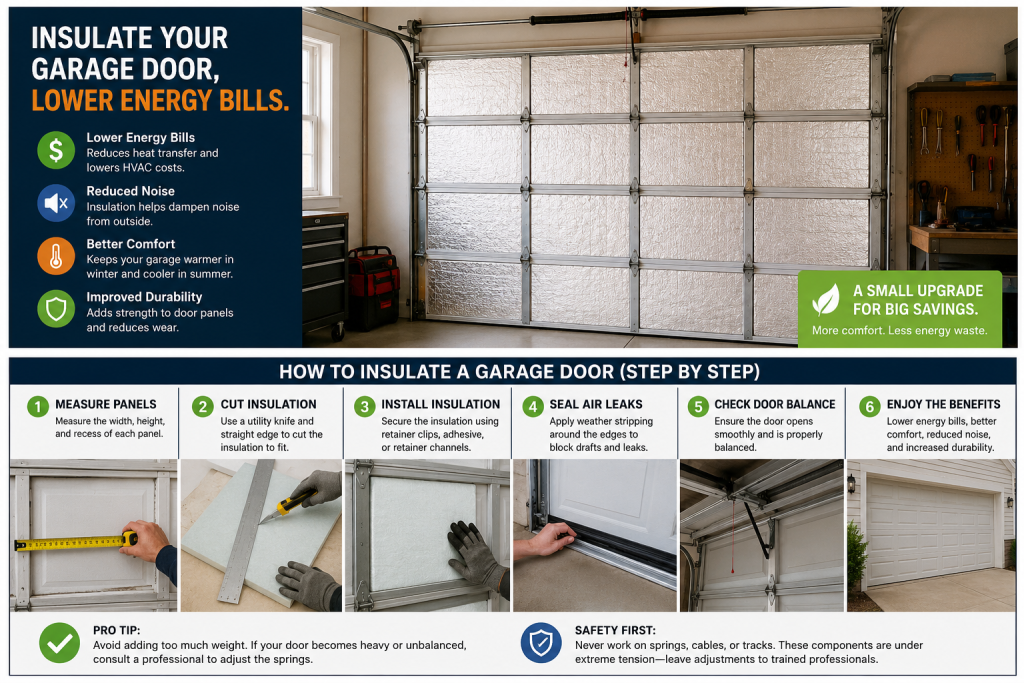
Step 1: Measuring Garage Door Panels
You should keep in mind that correct measurement guarantees perfect fitting of insulation.
Therefore, it is necessary to take into consideration:
-width of the panels
-height
-recess depth
Step 2: Cutting Insulation Panels
Use a utility knife with a straight edge for cutting insulation panels accurately.
Insulation needs to be fitted perfectly in the garage door panels.
Step 3: Installing Insulation
It is important to remember as a homeowner that you need to keep your garage door from being overburdened by installing insulation.
It is crucial to install insulation by applying:
-retention clips
-adhesive
-retainer channels
Step 4: Sealing Air Leaks from the Garage Door
No matter how well insulated your garage door is, it becomes less efficient because of air leakage. That is why a Professional Maintenance Services can help check for seals that have gotten old, misalignment, and balance that affect energy efficiency.
Be aware that the items that need replacing include:
-Bottom seals
-Side weather-stripping
-Top seals
Step 5: Checking Door Functioning
Open and close the door a few times after installing it.
It is important to remember that one should not try adjusting the garage door torsion springs as homeowners and professional garage door mechanics advise against this action because of the danger of getting injured during such work because of the high pressure in the springs.
Therefore, pay attention to:
-Inconsistent functioning
-Straining noise
-Slow closing
-Problems with balance
Insulation of a Garage Door – Will It Save You from Higher Energy Costs?
Certainly, the insulating of the garage door will help you cut down costs associated with electricity bills, especially if you own a connected garage.
The reasons include:
-Separating any leaks of air
-The adjoining property of a garage to the house
-Climatically regulated rooms neighboring the garage
Realistic Cost Savings through the Insulation of the Garage
One is most likely to experience:
-Stabilization of room temperature
-Increased efficiency of HVAC systems
-Comfort in rooms adjacent to the garage
Nevertheless, despite the insulation of the garage door, climate control of the garage itself hasn’t been ensured.
For overall assistance regarding air sealing and insulation performance, check the Environmental Protection Agency’s ENERGY STAR Home Sealing Guide.
What Is the Cost of Insulating a Garage Door?
The cost of insulating a garage door varies based on the following factors:
-Door size
-Insulation material
-DIY or professional installation service
Costs of DIY Insulation for Garage Doors
One-car garage door: $100-$180
Two-car garage door: $150-$300
DIY garage door insulation packages usually include:
-Pre-fabricated panels
-Fasteners
-Adhesive
-Retention clips
Costs for Professional Garage Door Insulation
Professionals can install insulation at a cost ranging between $300 and $800.
Other repairs could result in more costs if the garage door:
-has worn-out rollers
-had damaged panels
-bad springs
-air leakage
How Much Does a 2 Car Insulated Garage Door Cost?
Total cost of replacing old garage door by installing an insulated garage door:
Insulated Steel Garage Door: $1,200 – $2,500
Insulated Premium Garage Door: $2,500 – $4,000+
Variables that can affect the cost include:
-Insulation R value
-Materials quality
-Garage door windows
-Reinforcement against wind load
-Smart operator systems
Property owners looking for a complete solution can check out Optimal Garage Door Services.
How to Properly Insulate Your Garage Door in Winter
To properly insulate your garage door in winter, you need to use both insulated panels and weatherproofing.
List of Items Needed to Insulate Garage Door in Winter
High R-Value Insulation
A high R-value gives better heat resistance.
Polyiso foam board is widely used for winter climates.
Replace Worn Weather Seals
As a homeowner, you should always be aware that weather stripping damage will greatly affect your insulation’s efficiency.
This is since cold air tends to seep in from:
-The bottom
-The sides
-The top
Insulate Surrounding Spaces
For garage door insulation to work effectively, it requires:
-Wall insulation
-Ceiling insulation
-Insulation for entry doors
-Effective ventilation
Common Insulation Mistakes For Your Garage Door
The use of heavy materials
Heavy materials may put extra pressure on:
-Springs
-Hinges
-Garage door opener
-Rollers
Ignoring maintenance problems
Insulating a problematic garage door will not correct the problems occurring during operation. Thus, the following mentioned problems need to be resolved using professional garage door repair services.
Problems:
-Noise when moving
-Damaged track
-Slack cables
-Difficult operation
Insulating your garage door hardware
Do not obstruct:
-Tracks
-Springs
-Sensors
-Hinges
Final Checklist Prior to Insulating Your Garage Door
Before you start your project, do the following:
-Take precise measurements of the garage door panels
-Chose appropriate insulation depending on climate
-Check and replace damaged weather seals
-Use lightweight materials for insulation
-Do a test run for the garage door after installing the insulation
-Never try to adjust the springs/cables yourself
Conclusion
Among the most useful things that a homeowner can do is learning how to insulate their garage door.
When combined with correct weather-proofing, using proper insulating material will contribute towards achieving thermal stability and saving money on utilities, among other benefits.
If you are a homeowner who is having problems with your old and inefficient garage system, the services of Garage Door Installation & Replacement Services might prove to be particularly useful.
Frequently Asked Questions
Does insulation of garage doors work during winter?
Yes. The insulation of garage doors prevents the transfer of heat and enables you to maintain more constant garage temperature during cold days.
Which insulation material should be used on garage doors?
One of the best insulation materials is foam board insulation. This material works well thermally but does not add too much weight.
Does insulation of garage doors prevent noise?
Yes. Proper insulation prevents vibrations and any other type of outside noise.
Can insulation affect the garage door opener?
Over-insulation or too much insulation affects the garage door opener as well as the springs. It is always advisable not to overload your insulation in the garage.
Is it wise to replace an old garage door with an insulated one?
Yes, in most cases, this is recommended due to the energy efficiency that comes with insulated doors.