
Quick Summary
-Garage door performance depends on several parts working together.
-Among the parts, the cables, drums, springs, and rollers are usually worn out first.
-Problems with garage doors are often caused by defective various parts.
-Regular inspections of garage doors may allow avoiding expensive repairs.
-Only professionals should be involved in repairing torsion springs and cables.
-Understanding the function of each particular component of the garage door helps owners properly order repairs.
A garage door is one of the largest moving mechanisms in your home. However, most homeowners only think about their garage doors when something is not functioning properly. The trouble can be caused by failure to open, strange sounds, or poor movement of the door; often, all the issues mentioned arise from one or more garage door components that need replacing.
However, knowledge about garage door components does not necessarily mean that a homeowner should be ready to repair them right away. Knowing how the system works helps to notice signs of malfunctioning, be advised on the aspects of repair, which means being able to make a right choice when there is a need to call a garage door repair specialist.
In this informative article, the essential garage door components will be provided along with their functions, the use of the system, the most vulnerable parts of the garage door that need replacing, and ways to keep the entire system functional longer.
What Are the Various Garage Door Components?
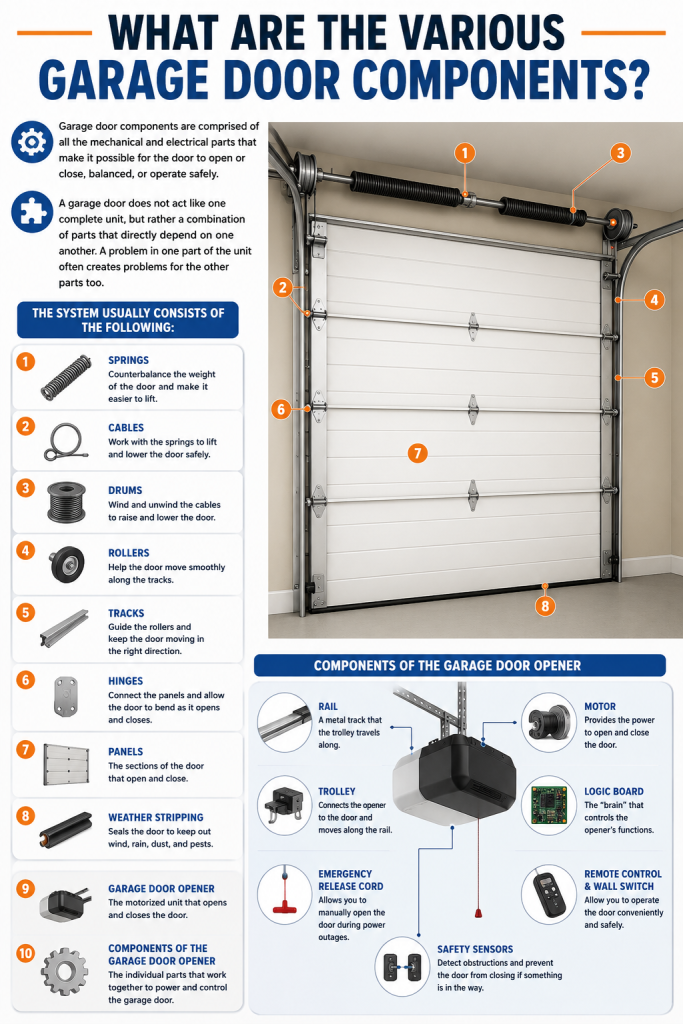
Garage door components are comprised of all the mechanical and electrical parts that make it possible for the door to open or close, balanced, or operate safely.
A garage door does not act like one complete unit, but rather a combination of parts that directly depend on one another. A problem in one part of the unit often creates problems for the other parts too.
The system usually consists of the following:
-Springs
-Cables
-Drums
-Rollers
-Tracks
-Hinges
-Panels
-Weather stripping
-Garage door opener
-Components of the garage door opener
What is the Importance of Learning the Various Garage Door Components?
Garage door components knowledge allows homeowners to be more knowledgeable. Although repairs shouldn’t be attempted by homeowners themselves, identifying problems early will reduce repair costs and down time.
The advantages of this knowledge are:
-Detecting warning signs
-Describing problems better when in service call
-Understanding repair suggestions
-Avoiding extra damage that is due to late repairs
-Enhancing overall safety of garage doors
Which Garage Door Parts Wear Out the Most?
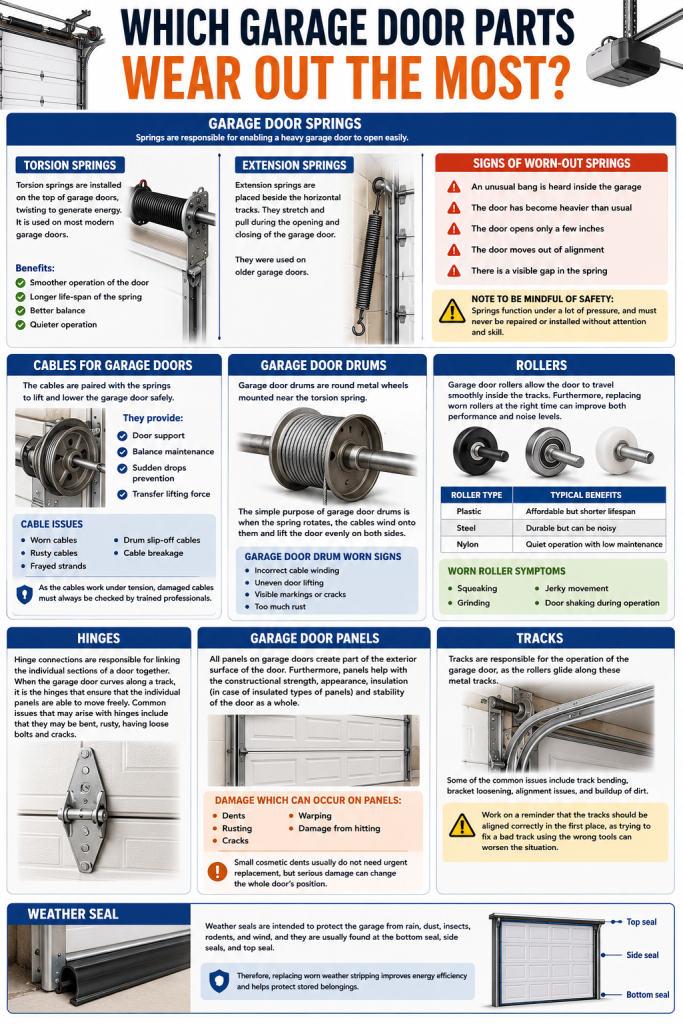
Garage Door Springs
Springs are responsible for enabling a heavy garage door to open easily.
Torsion Springs
Torsion springs are installed on the top of garage doors, twisting to generate energy. It is used on most modern garage doors.
Benefits:
-Smoother operation of the door
-Longer life-span of the spring
-Better balance
-Quieter operation
Extension Springs
Extension springs are placed beside the horizontal tracks. They stretch and pull during the opening and closing of the garage door.
They were used on older garage doors.
Signs of Worn-out Springs
-An unusual bang is heard inside the garage
-The door has become heavier than usual
-The door opens only a few inches
-The door moves out of alignment
-There is a visible gap in the spring
Note to be mindful of safety: Springs function under a lot of pressure, and must never be repaired or installed without attention and skill.
Cables For Garage Doors
The cables are paired with the springs to lift and lower the garage door safely.
They provide:
-Door support
-Balance maintenance
-Sudden drops prevention
-Transfer lifting force
Cable Issues
-Worn cables
-Rusty cables
-Frayed strands
-Drum slip-off cables
-Cable breakage
As the cables work under tension, damaged cables must always be checked by trained professionals.
Garage Door Drums
Garage door drums are round metal wheels mounted near the torsion spring.
The simple purpose of garage door drums is when the spring rotates, the cables wind onto them and lift the door evenly on both sides.
Garage Door Drum Worn Signs
-Incorrect cable winding
-Uneven door lifting
-Visible markings or cracks
-Too much rust
Rollers
Garage door rollers allow the door to travel smoothly inside the tracks. Furthermore, replacing worn rollers at the right time can improve both performance and noise levels.
| Roller Type | Typical Benefits |
| Plastic | Affordable but shorter lifespan |
| Steel | Durable but can be noisy |
| Nylon | Quiet operation with low maintenance |
Worn Roller Symptoms
-Squeaking
-Grinding
-Jerky movement
-Door shaking during operation
Hinges
Hinge connections are responsible for linking the individual sections of a door together. When the garage door curves along a track, it is the hinges that ensure that the individual panels are able to move freely. Common issues that may arise with hinges include that they may be bent, rusty, having loose bolts and cracks.
Garage Door Panels
All panels on garage doors create part of the exterior surface of the door. Furthermore, panels help with the constructional strength, appearance, insulation (in case of insulated types of panels) and stability of the door as a whole.
Damage which can occur on panels:
-Dents
-Rusting
-Cracks
-Warping
-Damage from hitting
Small cosmetic dents usually do not need urgent replacement, but serious damage can change the whole door’s position.
Tracks
Tracks are responsible for the operation of the garage door, as the rollers glide along these metal tracks.
Some of the common issues include track bending, bracket loosening, alignment issues, and buildup of dirt.
Work on a reminder that the tracks should be aligned correctly in the first place, as trying to fix a bad track using the wrong tools can worsen the situation.
Weather Seal
Weather seals are intended to protect the garage from rain, dust, insects, rodents, and wind, and they are usually found at the bottom seal, side seals, and top seal. Therefore, replacing worn weather stripping improves energy efficiency and helps protect stored belongings.
How Do Garage Door Opener Components Work Together?
While the garage door opener automates the lifting process, it does not bear the whole weight of the door. Rather, the opener system operates together with the spring system.
Motor Unit
The motor provides power to make the door works. Thus, modern motors may be of any of the belt drive, chain drive, screw drive, and direct drive types.
Rail
Rail is responsible for guiding the trolley during the lifting operation. However, if the rail was bent or damaged, there may be problems in the operation.
Trolley
The trolley is the part that connects the garage door opener with the door itself. The trolley runs on the rail when the door opener is engaged.
Drive system
The drive system being utilized can vary by door opener. The drive system can rely on the chain, reinforced belt, or screw mechanism. Each one has different benefits in terms of sound, reliability, and maintenance.
Safety sensors
Safety sensors are located close to the bottom of the garage door frame and detect when something is in the way of the door path. The sensors will signal to the door opener to reverse when something interrupts the beam.
The common reasons why garage doors do not close properly, it is because it’s dirty or it has misaligned sensors.
Remote Controls and Wall Controls
Remote and wall controls will communicate with the garage door opener for convenient operation.
How Do All Garage Door Components Function Together?
Consider your garage door as one unit. Therefore, if any one component fails, the other components must work more to compensate for the broken component.
Here is how an average opening cycle goes:
-You turn on the opener
-The opener activated the drive system
-The spring system helps lift the door
-The cables wrap round the garage door drums
-The rollers move along the tracks
-The hinges allow the panels to bend smoothly
-The door reaches at the fully opened position
Indicators That Garage Door Parts Require Attention
A large number of homeowners detect some slight hints of trouble before total failure happens. This is why scheduling a maintenance service in advance is often an effective way to avoid making bigger repairs later on, as well as for the homeowners safety.
Keep an eye on the following things:
-Loud grinding sounds
-Creaking sounds
-Uneven movement of the door
-Sluggish operation
-Sudden reversal of the door
-Sagging parts of the door
-Visible rust
-Frayed cables
-Bent tracks
-Loose parts
-Strong vibrations
How Long Do Garage Door Parts Typically Last?
| Garage Door Part | Typical Lifespan |
| Springs | 7–15 years (depending on cycle rating) |
| Rollers | 10–20 years |
| Hinges | 10–15 years |
| Cables | 8–15 years |
| Weather Seal | 2–5 years |
| Garage Door Opener | 10–15 years |
| Safety Sensors | Often last the life of the opener if maintained |
Regular inspections can help identify wear before a failure occurs.
Which Garage Door Repairs Are Safe for Homeowners?
There are several basic maintenance tasks that homeowners can safely carry out.
These tasks can include:
-Cleaning out the tracks
-Wiping the safety sensors
-Lubricating certain moving parts
-Changing the batteries of the remote
-Checking the weatherproof seals
-Inspecting for visible damages
On the other hand, any tasks that deal with cables, springs, drums, and main components of the opener should be done exclusively by trained specialists because the above-mentioned components operate under high tensions and loads.
Conclusion
Awareness of the need for vital garage door components allows homeowners to discover the dangers ahead of time, communicate better during repairs and ensure the garage door works well for years to come.
The garage door spring, cables, drive systems, drums and panels all work together as a single system. This implies the need for continuous inspections, basic maintenance and early interventions to avoid failures and increase the service life of the garage door.
Please pay special attention to unusual sounds, jerky movement and visible wear, because tackling small problems early helps avoid serious troubles later.
Frequently Asked Questions
What is the most important part of a garage door?
The spring is one of the most important parts of the garage door as it balances the weight of the door. If the spring is not functioning properly, the opener will not be able to lift the door safely.
Can I replace cables of the garage door myself?
No. The garage cable operates on a high tension together with the springs, and replacing the cable without experience is dangerous. Thus, it must be done by a trained person.
How long does a garage door opener last?
Most residential garage door openers have a lifespan of between 10 and 15 years depending on the use, maintenance and the climatic conditions.
What causes my garage door to be so noisy?
Noises can usually be attributed to worn-out rollers, loose hardware, old hinges, too little lubrication and the like. This is why it is best to consult a specialist for a professional inspection to identify the exact issue and avoid further damage.
Is it possible to change a broken garage door panel?
In some cases, yes. If the model is still available and the other panels of the garage door are intact, it is possible to change only one garage door panel. But if the damage is significant, the best option is to replace the whole door at once.