
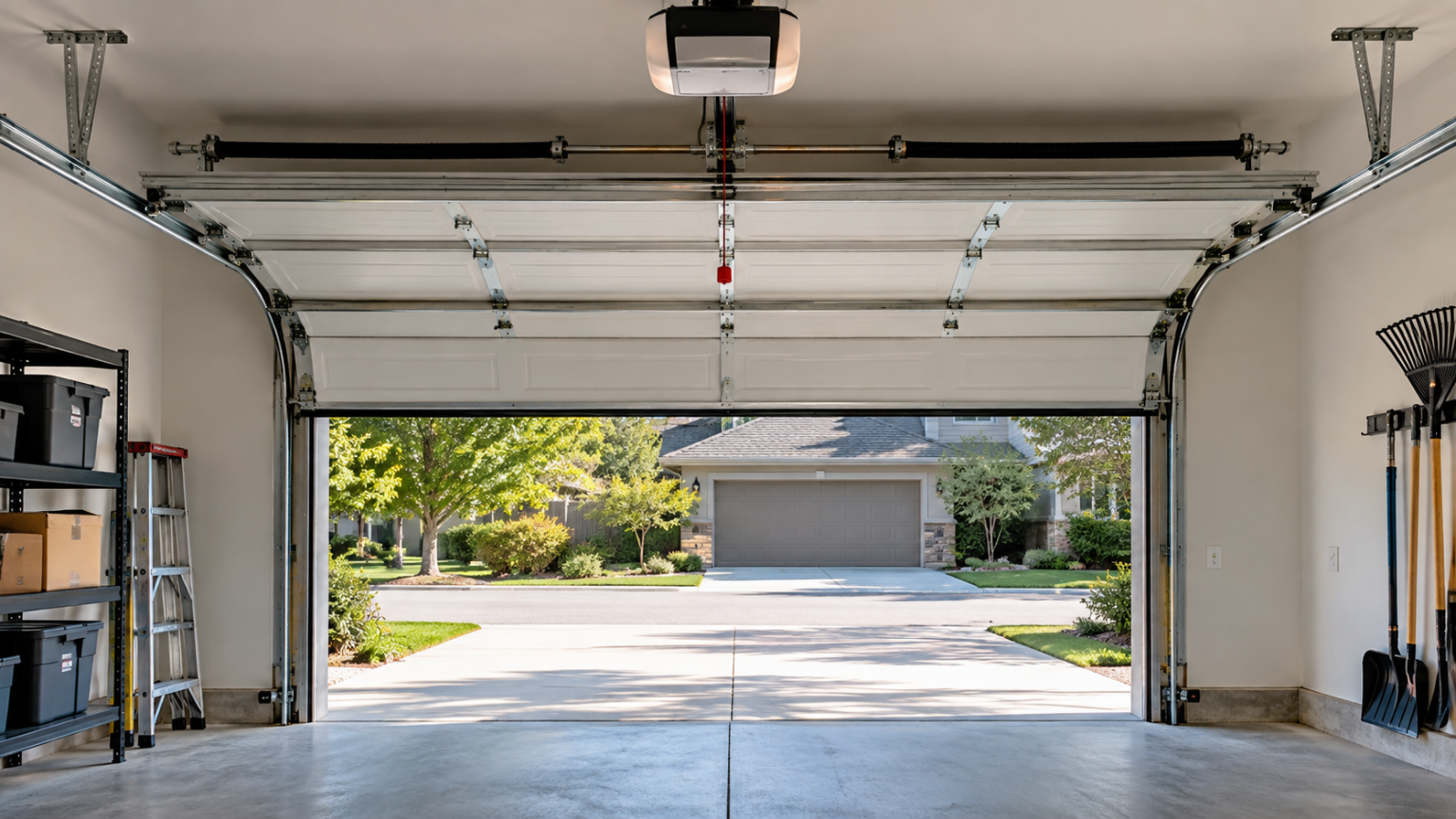
If your garage door isn’t working, it could be either a simple problem like an empty battery in the remote or a more severe and complicated issue such as broken springs, damaged cables, and faulty openers. Knowing how to troubleshoot the door can help you identify likely the cause without turning a small issue into a bigger one.
The best option is to begin with the easiest checks. If you have identified the problem as spring issue, worn out cables, serious damage, heavy or unstable garage door, you should cease diagnosing the problem and call a garage door expert.
Important Points
-The first thing to check is the power source, wall control, remote control, and safety sensors.
-A powered garage door that is not functioning could indicate an issue with the garage door opener, the sensor, or could indicate a mechanical failure.
-If the door is stuck, is abnormally heavy, or is uneven, it is best not to attempt to open or close it.
-The problem with the garage door remote is usually associated with the batteries, programming, or interference.
-Issues with the keypad usually involve batteries, programming, or the keypad itself.
-Different types of Genie and LiftMaster door openers offer different indicators and programming options.
-The cables and springs are under high pressure and must be repaired only by a skilled technician.
Reasons Why My Garage Door Is Not Working
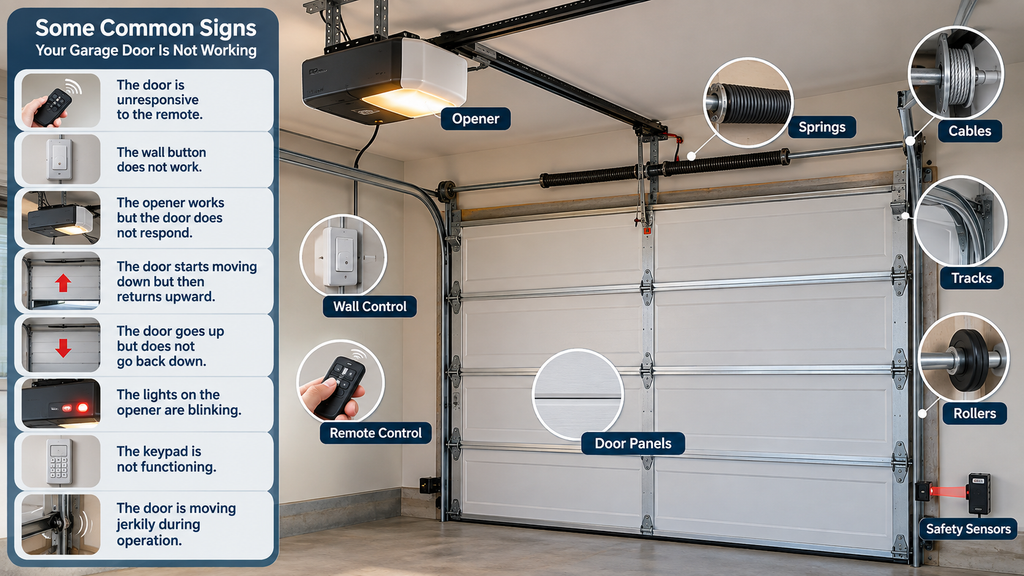
Simply not working does not imply that a garage door has failed. There are many parts to the garage door system that must work together for the system to function. The components include the opener, wall control, remote control, safety sensors, cables, tracks, springs, rollers, and the door panels.
If even one component is malfunctioning, it can stop the garage door from working properly.
Some signs include:
-The door is unresponsive to the remote.
-The wall button does not work.
-The opener works but the door does not respond.
-The door starts moving down but then returns upward.
-The door goes up but does not go back down.
-The lights on the opener are blinking.
-The keypad is not functioning.
-The door is moving jerkily during operation.
What Is the First Thing to Check When Your Garage Door Does Not Work?
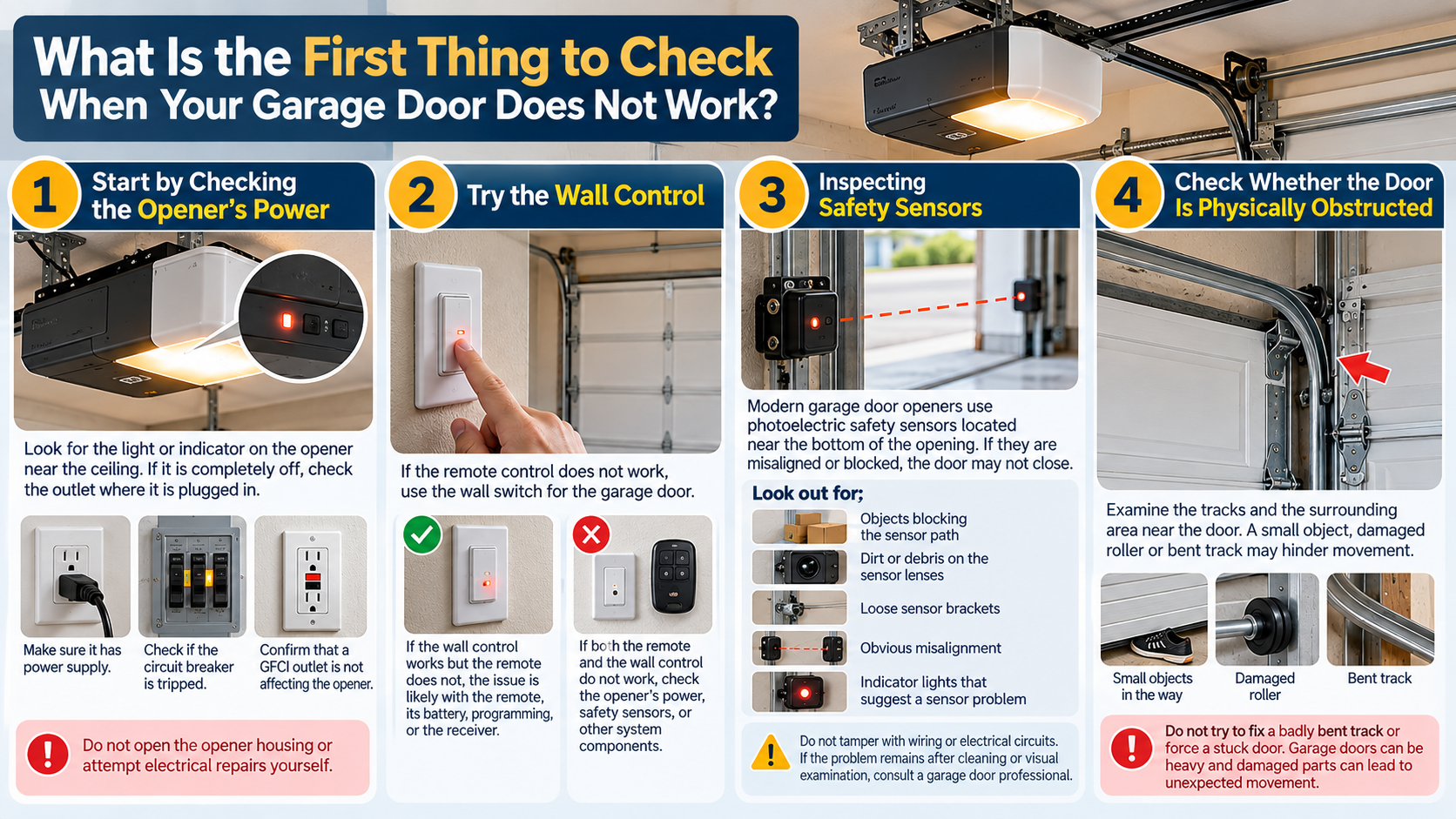
1. Start by Checking the Opener’s Power
If your garage door opener malfunctions, the first thing you should check is whether it has power. Look for the light or indicator on the unit located near the ceiling, if it is completely off then check the outlet where the unit is plugged in for faulty power supply.
Make sure that a circuit breaker is not tripped or GFCI outlet is affecting the opener. Also, do not open the opener housing or attempt electrical repairs yourself.
2. Try the Wall Control
If the remote control for the garage door does not function, use the wall switch for the garage door.
If the wall control works but the remote does not, the problem most probably lies with the remote control device, its battery, the programming, or the receiver.
If both the remote control and the wall control do not function, investigate the opener’s power, safety sensors, or other system components.
3. Inspecting Safety Sensors
The majority of modern automatic garage door openers rely on photoelectric safety sensors located near the bottom of the opening.
These sensors are positioned facing each other across the garage doorway. In any scenario, either misalignment or obstacle can stop the door from being closed.
Look out for:
-Objects blocking the sensor path
-Dirt or debris on the sensor lenses
-Loose sensor brackets
-Obvious misalignment
-Indicator lights that suggest a sensor problem
Do not tamper with wiring as well as electrical circuits. However, if the problem remains still after some cleaning or visual examination, it is advisable to consult an expert.
4. Check Whether the Door Is Physically Obstructed
Examine the tracks and the surrounding area near the door.
A small object, damaged roller or bent track may both hinder movement.
Do not try to fix a badly bent track or force a stuck door. Garage doors can be heavy and damaged parts can lead to unexpected movement.
Why Is My Garage Door Opener Not Working?
If the Opener is Silent
If no light, sound, or any other response is apparent from the opener, the first thing to check is if the device has the required power.
If the power status is ok and the door opener remains unresponsive, it may be time to look for a professional diagnosis.
When the Opener Is Working and the Garage Door is Not
This might signify a mechanical issue as opposed to merely a problem with the remote control.
The opener may be operating while another component prevents the door from moving correctly.
Do not keep trying to operate the opener in order to force the garage door to move, as it could aggravate an existing mechanical issue.
If the Door Reverses While Closing
A door that is closing and then reversing may be responding to its safety technology systems. So, check the sensor zone for visible blockage and look for any issues with the sensors such as dirt or obvious alignment issues.
If the issue persists, it may be time to consult with a professional.
Why Does My Garage Door Remote Not Work?
Common Remote Problems
Check for:
- A weak or dead battery
- A damaged remote
- Accidental programming changes
- Interference or range problems
- A problem with the opener’s receiver
If another programmed remote works normally, that provides a useful clue that the issue is specific to the first remote.
If none of the remotes work, investigate the opener and its power supply rather than replacing remotes immediately.
What If the Remote Works Only From Very Close?
Having a remote that works solely within close proximity to the garage may indicate a problem with the battery, damage, interference, or a malfunctioning receiver.
Changing the battery might be a sensible approach. If the problem persists, diagnosing the problem with the remote or opener will be necessary.
Why Is My Garage Door Keypad Not Working?
The garage door keypad not responding is usually due to issues with the battery, its programming, the buttons, or connection with the garage opener.
Take these basic checks:
-Replace the keypad battery if it is weak or dead.
-Make sure you are entering the correct programmed code.
-Check whether the keypad shows any signs of power.
-Look for visible damage or stuck buttons.
-Determine whether the garage door works from the wall control or remote.
Test whether the garage door can still be operated from the remote or the wall switch. If the garage door keypad does not respond after you have followed the above guidelines you might have to reprogram your keypad or might replace it.
What If a Genie Garage Door Opener Is Not Working?
If you notice that your Genie garage door opener is not working, issues involved may be one or more of the following components including power, safety sensors, remote control, programming, or mechanical parts.
All Genie openers come with diagnostic indicators and functions that vary from one model to another.
Start with some basic checks to see if the following actions will help:
-Check the power.
-Test the wall control.
-Check the safety sensors.
-Replace weak remote batteries.
-Look for visible obstruction.
-Ensure door movement is normal.
What If a LiftMaster Garage Door Opener Is Not Working?
The malfunction of a LiftMaster garage door opener can also be due to power problems, sensor issues, remote failure, programming errors, or mechanical problems.
Different LiftMaster models will offer diagnostic codes via the indicator lights or through controls. The meaning of these diagnostic codes will depend on the manufacturer and model.
If your LiftMaster responds but the door does not operate normally, note what happens when you press the wall control or remote.
For example:
| Symptom | Possible area to investigate |
| No response at all | Power, opener, wall control |
| Remote fails but wall button works | Remote, battery, programming |
| Door will not close | Safety sensors or obstruction |
| Opener runs but door does not move | Mechanical components |
| Door reverses | Safety system or travel-related issue |
| Keypad fails | Battery, programming, keypad |
When Is a Garage Door Problem Too Dangerous to Troubleshoot Yourself?
There are certain components of garage doors that should be left to professionals and avoided as DIY repair jobs. Among these components, we have lift cables and torsion or extension springs. Such components can store high mechanical energy, which may result in injuries if improper repair or handling measures are applied.
Stop troubleshooting and contact a trained professional if:
-A spring is broken.
-A cable is loose, detached, or visibly damaged.
-The door is crooked or hanging unevenly.
-The door suddenly became extremely heavy.
-A panel or track is severely damaged.
-The door is stuck in a dangerous position.
-You hear a loud snap followed by loss of normal operation.
-The opener repeatedly operates against a door that cannot move normally.
Final Thoughts
In the case that a garage door fails to operate, start off with easy investigations like inspecting the power outlet, wall buttons, remote batteries, safety sensors, and visible obstructions.
If those solutions yield no satisfactory results, or in the instance of the observation of damaged springs or cables, damaged tracks, heavy door or unstable hardwares, stop any kind of further tests and get in touch with a qualified garage door technician.
The goal is not simply to get the door moving again. It is to identify the underlying problem safely and prevent a minor issue from becoming a larger garage door failure.
FAQ
Why is my garage door not working but the opener has power?
If the opener has power but the door does not operate, possible causes include safety sensor problems, remote or wall-control issues, programming problems, or mechanical failures. Check the sensors and controls first. If the opener responds but the door cannot move normally, professional inspection may be necessary.
Why does my garage door remote not work but the wall button does?
If the wall button works but the remote does not, check the remote battery first. Other possibilities include lost programming, a damaged remote, interference, or a receiver problem. If another programmed remote works normally, the original remote is more likely to be the source of the problem.
Why won’t my garage door close?
A garage door that will not close may be responding to its safety sensors. Check for visible obstructions, dirt on the sensor lenses, or obvious sensor alignment problems. If the door still refuses to close, have the opener and door system inspected rather than bypassing the safety system.
Why is my garage door keypad not working?
A keypad may stop working because of a weak battery, incorrect programming, damaged buttons, or a communication problem with the opener. Replace the battery and verify the code before pursuing additional troubleshooting. Model-specific programming instructions should come from the opener manufacturer.
Can I fix a broken garage door spring myself?
Garage door springs are high-tension components and can cause serious injury if improperly handled. Spring replacement should be performed by a trained garage door professional with the appropriate tools and knowledge. Homeowners should not attempt to remove, adjust, or replace a broken spring themselves.
When should I call a garage door professional?
Call a professional when the door is unusually heavy, crooked, stuck, or visibly damaged, or when you see a broken spring or loose cable. Professional service is also appropriate when basic checks do not identify why the opener or door is not operating correctly.