
Key Takeaways
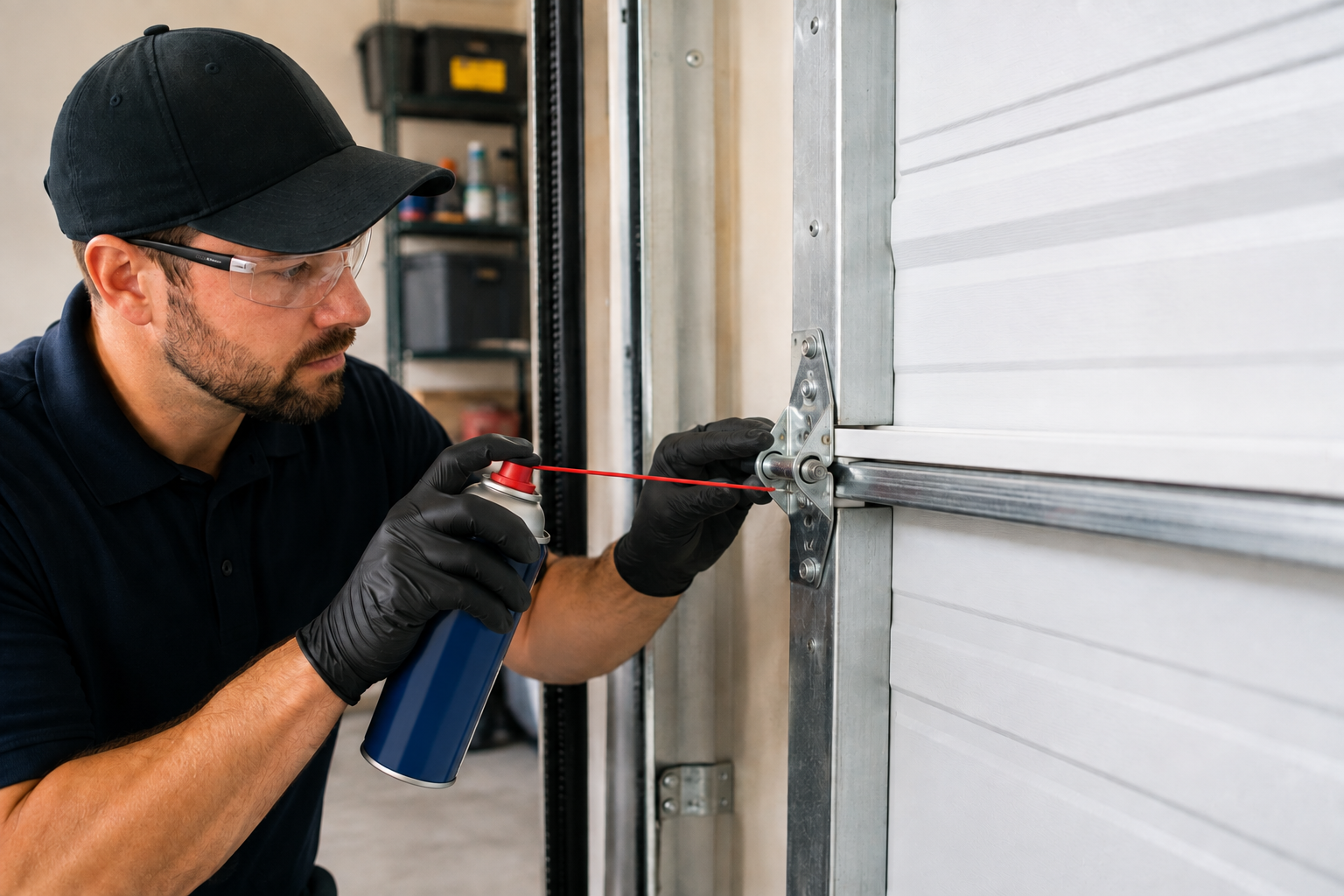
-Lubricating your garage door every 6 to 12 months minimizes noise and wear and tear.
-Apply a garage door lubricating spray made for garage doors.
-Be sure to lubricate parts like rollers, bearings, hinges, springs, and chains if your garage door has them.
-Do not use a regular grease or oil on the track.
-Regular lubrication can improve garage door performance and prolong its lifespan.
When the garage door is noisy and jerkily opening and closing, it usually indicates that maintenance is much needed. Luckily, one of the simplest ways to enhance the garage door’s performance is to use the appropriate garage door lubricant.
Using lubricants correctly helps to reduce the friction among the moving parts. Besides, your opener will work more effectively and result in less wear and tear. Therefore, whether you are going to lube your garage door for the first time or you are confused about which lubricating substance to choose, knowing the basics will save your time and help avoid unnecessary repairs.
This article also describes how to apply garage door lubricant, what lubricant products work best in practice, what mistakes to avoid and how often to perform the maintenance. As a homeowner you should always take good care of your garage door by doing some maintenance with the help of a garage door maintenance expert.
The purpose of garage door lubricant
The garage door lubricant is a type of lubricant that is formulated for the purpose of maintaining the moving parts of a garage door. The composition of garage door lubrication is different. In addition to reducing friction, it is also designed to avoid dust accumulation.
A good lubricant has the following merits:
-Reduces noise
-Prevents corrosion
-Provides the smooth operation of the door
-Extends the service life of parts
-Minimizes the load of the garage door opener.
Applying the correct lubricant is an easy and affordable maintenance practice that can ensure its reliability.
The Importance of Lubricating Garage Doors
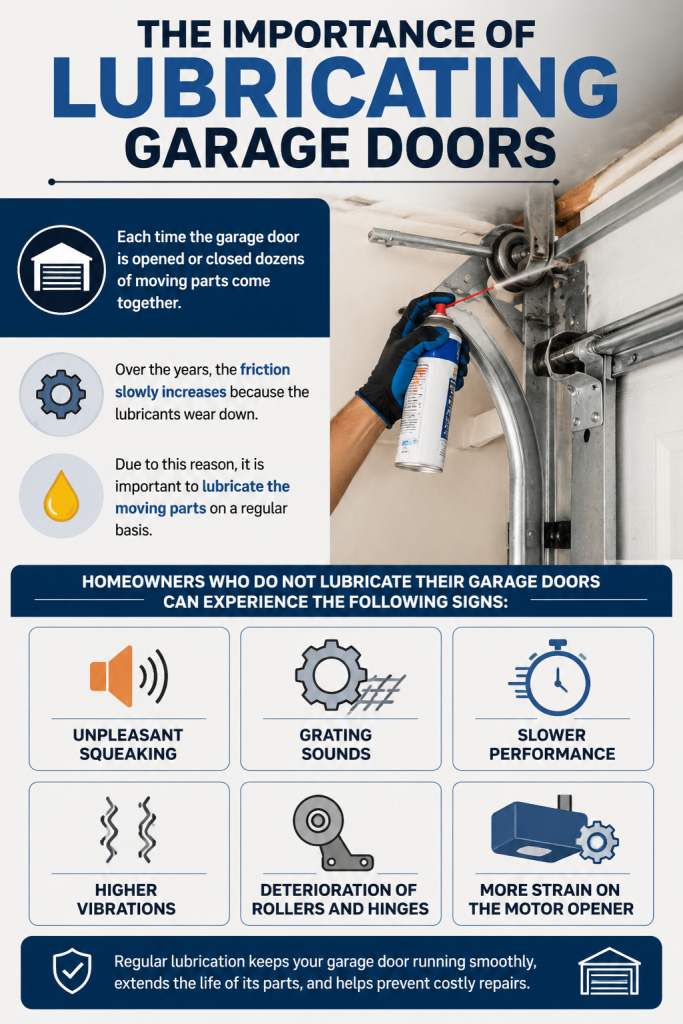
Each time the garage door is opened or closed dozens of moving parts come together. Over the years, the friction slowly increases because the lubricants wear down. Due to this reason, it is important to lubricate the moving parts on a regular basis.
Homeowners who do not lubricate their garage doors can experience the following signs:
-Unpleasant squeaking
-Grating sounds
-Slower performance
-Higher vibrations
-Deterioration of rollers and hinges
-More strain on the motor opener
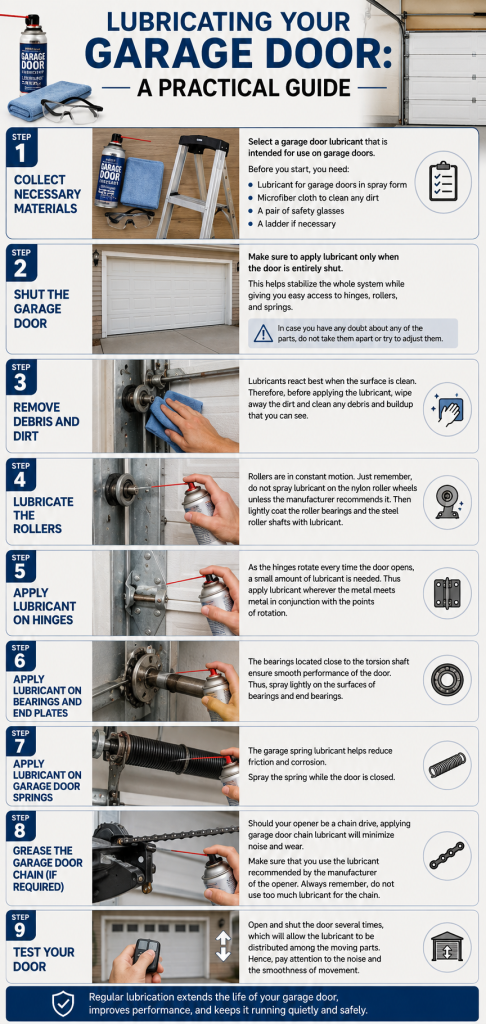
Lubricating Your Garage Door: A Practical Guide
Step 1. Collect Necessary Materials
Select a garage door lubricant that is intended for use on garage doors.
Before you start, you need:
-Lubricant for garage doors in spray form
-Microfiber cloth to clean any dirt
-A pair of safety glasses
-A ladder if necessary
Step 2. Shut the Garage Door
Make sure to apply lubricant only when the door is entirely shut.
This helps stabilize the whole system while giving you easy access to hinges, rollers, and springs.
In case you have any doubt about any of the parts, do not take them apart or try to adjust them.
Step 3. Remove Debris and Dirt
Lubricants react best when the surface is clean. Therefore, before applying the lubricant, wipe away the dirt and clean any debris and buildup that you can see.
Step 4. Lubricate the Rollers
Rollers are in constant motion. Just remember, do not spray lubricant on the nylon roller wheels unless the manufacturer recommends it. Then lightly coat the roller bearings and the steel roller shafts with lubricant.
Step 5. Apply Lubricant on Hinges
As the hinges rotate every time the door opens, a small amount of lubricant is needed. Thus apply lubricant wherever the metal meets metal in conjunction with the points of rotation.
Step 6. Apply Lubricant on Bearings and End Plates
The bearings located close to the torsion shaft ensure smooth performance of the door. Thus, spray lightly on the surfaces of bearings and end bearings.
Step 7. Apply Lubricant on Garage Door Springs
The garage spring lubricant helps reduce friction and corrosion.
Spray the spring while the door is closed.
Step 8. Grease the Garage Door Chain (If Required)
Should your opener be a chain drive, applying garage door chain lubricant will minimize noise and wear.
Make sure that you use the lubricant recommended by the manufacturer of the opener. Always remember, do not use too much lubricant for the chain.
Step 9. Test Your Door
Open and shut the door several times, which will allow the lubricant to be distributed among the moving parts. Hence, pay attention to the noise and the smoothness of movement.
Where Should You Apply Garage Door Lube?
The following table summarizes where lubrication is recommended.
| Garage Door Component | Lubricate? | Notes |
| Rollers | Yes | Lubricate bearings and shafts |
| Hinges | Yes | Apply to pivot points |
| Springs | Yes | Light coating only |
| Bearings | Yes | Spray lightly |
| Chain Drive | Yes | Follow manufacturer recommendations |
| Screw Drive | Yes | Use approved lubricant if required |
| Tracks | No | Clean only; avoid lubricant buildup |
| Weather Seal | No | No lubrication needed |
You may also check out the garage door lubrication guide for more details on where and how to lubricate your garage door.
Which Lube Works Best for Maintaining a Garage Door?
Choosing the best lubricant depends on the garage door design, location, and manufacturer guidelines.
Uses of Silicone-based Lubricants
Some of the advantages of silicone-based lubricants are:
-Durability
-Resistance to water
-Low dirt attraction and retention
Recommended applications:
-Hinge
-Rollers and pivot brackets
-Springs
Lithium Based Spray Lubricants
White lithium formulas are often used by experts when dealing with metal moving components.
Some reasons why these types of lubricants are popular are:
-Excellent adhesion
-Long-lasting protection
-Excellent performance
Garage Door Spray Lube
Some products are sold under the name of garage door sprays and are tailored for residential garage doors.
The products have lubrication properties plus the resistance against the dirt.
Commonly Used Garage Door Lube
Here are some of the common products used by professionals and homeowners alike.
3 in 1 Garage Door Lube
Notably, 3 in 1 Garage Door Lube is designed for homeowner garage door applications. That said, it provides lasting lubrication, rust protection, and silent operation of the garage doors.
Blaster Garage Door Lube
This is another product that is widely used for the garage doors, and it is highly recommended to apply for hinges, rollers, springs, and bearings. Moreover, this product features a fast-drying composition allowing minimization of dirt build up.
Common Mistakes in Lubricating That Need to be Avoided
Most garage door problems occur due to improper maintenance and not due to lack of lubrication.
Using WD-40 as a lubricant
Ordinary WD-40 is mainly a cleaner and water displacer.
It may loosen parts that are stuck, but it is not meant to be used as a garage door lubricant for a long time.
Lubricating the Track
Garage door tracks should be kept clean and dry. However, adding lubricant will attract dirt and inhibit the movement of the rollers.
Applying Too Much Lubricant
As the saying goes, less is more. Having too much lubricant will attract dust and dirt, so using just a thin layer of lubricant will produce better results.
Ignoring Worn Parts
Lubrication cannot help with bent tracks, broken rollers, damaged hinges, worn out cables, and failing springs. If you notice that any of the parts are damaged, make sure to contact a professional inspection service.
When should you lubricate your garage door?
In general, homeowners need to lubricate their garage doors in every 6 to 12 months.
However, certain circumstances may require you to lubricate your garage door more often, such as, when using the garage door several times a day, living in humid or coastal climate area, having a dusty garage, or noticing squeaky noise or problems with movement of the door.
Garage Door Lubrication Checklist
✔ Inspect rollers
✔ Check hinges
✔ Lubricate springs
✔ Lubricate bearings
✔ Lubricate chain (if applicable)
✔ Wipe away excess lubricant
✔ Test door balance visually
✔ Listen for unusual noises
✔ Inspect weather seal
✔ Schedule service if parts appear damaged
Conclusion
In conclusion, one of the easiest and most efficient methods to ensure smooth operation of your garage door is its lubrication. A simple maintenance task with just a few minutes spent on lubrication every six to twelve months can significantly reduce wear and tear all major components of your garage, including rollers, springs, hinges, chains, and bearings.
Keep in mind to choose a good quality garage door spray lubricant, refrain from lubricating the tracks, and inspect all components for wear and damage.
Although lubrication of the garage door is an easy task that most homeowners can handle, repairs related to any moving parts of the garage door should be left to professionals.
Frequently Asked Questions
Am I allowed to apply normal household oil onto my garage door?
In most cases, it is believed that the lubrication made specifically for garage doors is undoubtedly the best option to use. Regular household oils can lead to the buildup of dirt particles and can lose their effects in a very short time.
Is silicone or lithium better as lubrication?
Both options work well. Silicone lubricants are known for their water resistance and lithium-based sprays provide long-lasting protection to many types of metal components. It is necessary to stick to the guidelines from the manufacturer of your garage door or opener.
Is it necessary to lubricate garage door tracks?
No. Instead of using lubricants on the track, the tracks should be kept clean.
How long is the duration of lubricants for garage doors?
For most residential garages, the lubricant can last for approximately six to twelve months depending on the usage.
Is it possible that lubrication can solve my garage door noise?
If the noise is caused by the lack of lubrication to certain parts, then proper lubrication will work. If the noise persists after the lubrication, this can indicate that certain parts of garage door should be checked by a professional.