
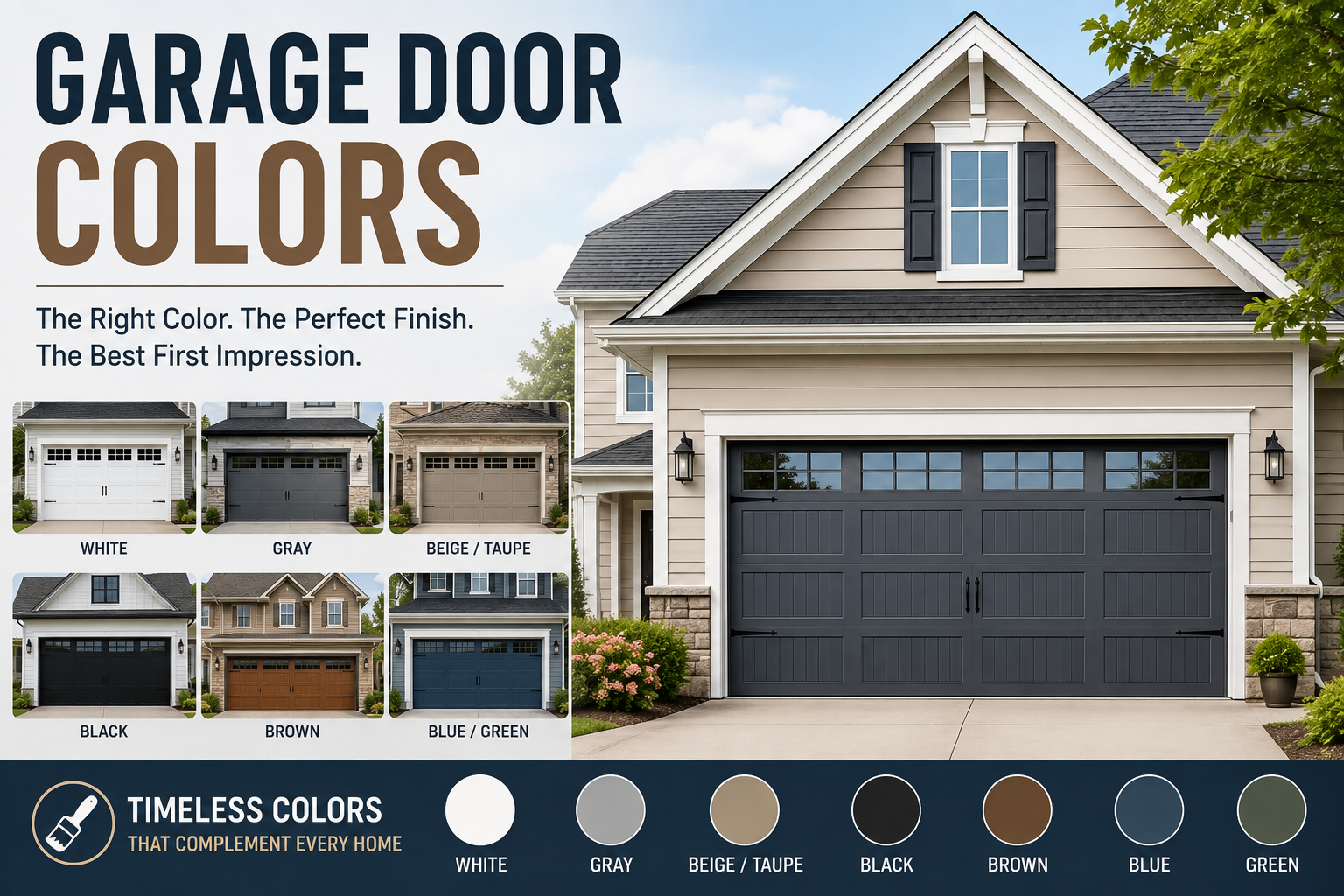
Since your garage door occupies so much of your home’s façade, it can have a huge impact on your property and its overall appearance. The appropriate color may make your home look more balanced, modern, inviting, or refined.
However, when it comes to deciding the color of your garage door, the process is more complicated than just picking a color that you like. You also have to consider several factors, such as the color of the siding of your house, what the roof looks like, what color the windows are, the style of your home’s architecture, and the material that you will use to make the garage door.
The good thing is that you will not need to do unnecessary calculations. By analyzing your house’s existing color, you will be able to choose the color for your garage door. However, it is better to seek a professional garage door designer to help you decide what is best for your garage door.
Key Takeaways
-When selecting the color of your garage door, you need to think about how well it fits the overall style of your home.
-White, beige, gray, and other neutral shades are good choices when it comes to garage door painting.
-A contrasting shade can help you create a dramatic effect.
-Dark colors absorb more heat compared to light colors, so it can be important if you live in a sunny area.
-If you have vinyl doors, be aware of the special characteristics of light reflectance value (LRV).
-Make sure to check HOA requirements.
-Always test the door color under natural lighting conditions before painting it.
The Significance of Garage Door Colors for Curb Appeal
Garage door colors are significant because they play an important role in the façade of a house. Choosing the right color can help the garage door match the architecture of the house, or it may act as an accent.
However, that does not mean that there is one absolute ‘better’ color. Curb appeal is defined by how well the garage door matches with the rest of the exterior.
For instance, shiny white garage doors look good against dark siding while a warm beige garage door will work better with a traditional brick home. A charcoal or black garage door will give a very modern look when paired with light-colored siding and trim.
Furthermore, exterior renovations can add a number of benefits too. According to Zonda’s report ‘Cost Vs Value 2024’, replacing the garage door ranks first as the most profitable home improvement project, with a return of investment of 194%. The percentage refers to the replacement of the garage door rather than a simple repainting, therefore it should be not interpreted as a reliable indicator of profit for changing the color only.
How Do You Select the Ideal Color for Your Garage Door?
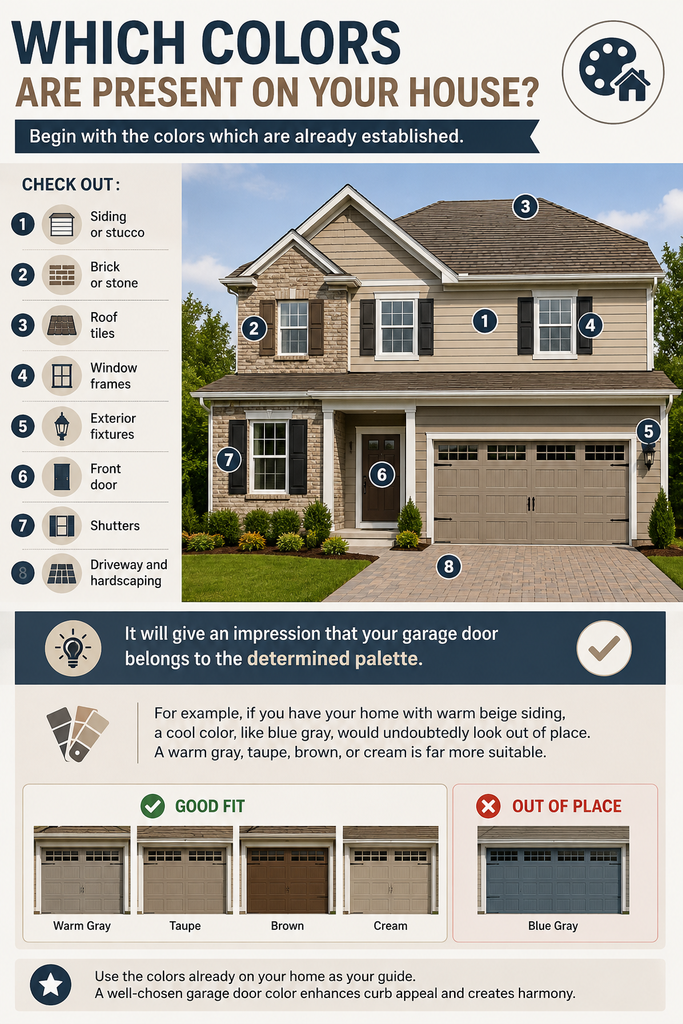
Step 1. Which Colors Are Present on Your House?
Begin with the colors which are already established.
Check out:
-Siding or stucco
-Brick or stone
-Roof tiles
-Window frames
-Exterior fixtures
-Front door
-Shutters
-Driveway and hardscaping
It will give an impression that your garage door belongs to the determined palette.
For example, if you have your home with warm beige siding, a cool color, like blue gray, would undoubtedly look out of place. A warm gray, taupe, brown, or cream is far more suitable.
Step 2. Should Your Garage Door Be Harmonized or Stand Out?
Select a matching color if:
-The garage is a major part of the front of the house.
-If you want a simple and classic look.
-If the house exhibits a multitude of colors in the exterior.
-If you prefer classic styling.
Select a contrasting color if:
-If you want to showcase the artistic flair of the garage.
-If the exterior is very plain.
-If you want a modern or dramatic look.
-If the garage has beautiful windows or decorations.
According to Sherwin-Williams, you can go for either coordinating the garage door’s color with the home’s exterior or using contrasting color scheme for interest.
Step 3. Which Colors of Garage Doors Work With Different Home Styles?
| Home style | Garage door color ideas |
| Modern | Charcoal, black, gray, white |
| Traditional | White, cream, beige, taupe |
| Craftsman | Earthy green, brown, warm gray |
| Farmhouse | White, black, muted gray |
| Spanish-style | Warm brown, cream, terracotta-inspired tones |
| Brick exterior | White, black, brown, deep gray |
| Contemporary | Dark gray, black, crisp white |
Step 4. How Do Home Exterior Materials Influence in Choosing the Color?
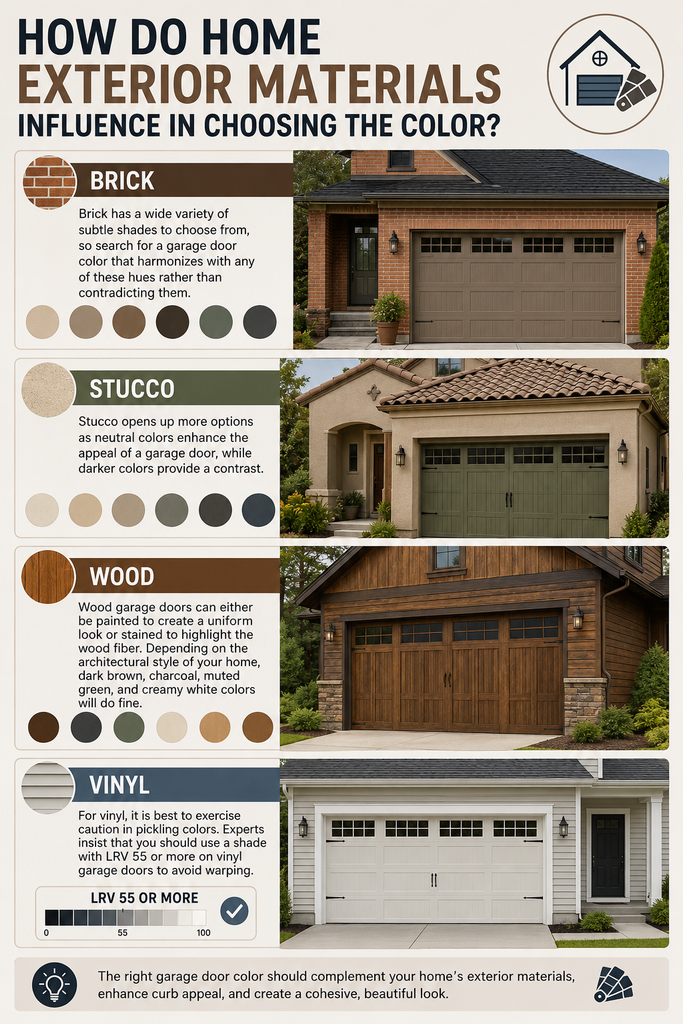
Brick
Brick has a wide variety of subtle shades to choose from, so search for a garage door color that harmonizes with any of these hues rather than contradicting them.
Stucco
Stucco opens up more options as neutral colors enhance the appeal of a garage door, while darker colors provide a contrast.
Wood
Wood garage doors can either be painted to create a uniform look or stained to highlight the wood fiber. Depending on the architectural style of your home, dark brown, charcoal, muted green, and creamy white colors will do fine.
Vinyl
For vinyl, it is best to exercise caution in pickling colors. Experts insist that you should use a shade with LRV 55 or more on vinyl garage doors to avoid warping.
Step 5. How Does Sun Exposure Impact the Colors of Garage Doors?
Exposure to the sun is a key factor to be considered particularly for dark colors.
Light Reflectance Value (LRV) is the measure of the light reflected by a color. Usually the values start at 0 for the darkest and go up to 100 for the lightest ones.
In terms of color, the lower the LRV the more light it absorbs. Therefore, in sunlight dark colors would get hotter than light colors.
Opaque dark door color can surely look nice in design, nevertheless its heat exposure will be much higher in the full sun. Moreover, some manufacturers of garage doors indicate that dark colors lead to thermal warping in some conditions. Amarr, for instance, warns about threats of thermal warping when it comes to using dark colors for garage doors and advises replacement of the finish based on exposure conditions.
If there is a lot of sunlight coming to your garage, make sure to follow the recommendations of garage door manufacturers when choosing very dark garage door paint colors.
Step 6. What Are the Most Versatile Garage Door Paint Colors?
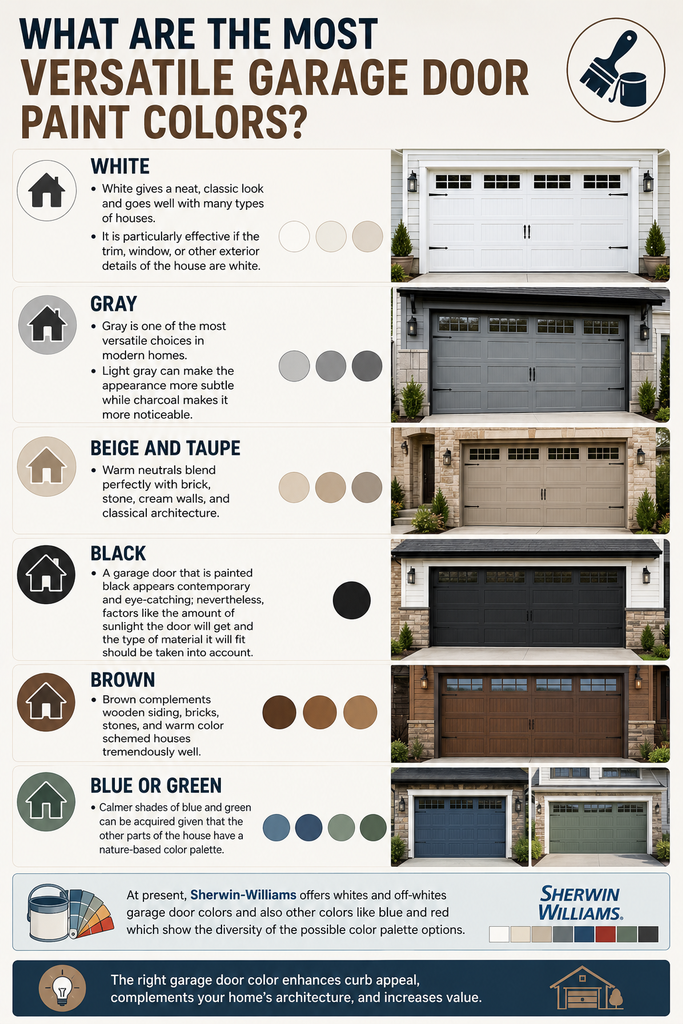
White
White gives a neat, classic look and goes well with many types of houses.
It is particularly effective if the trim, window, or other exterior details of the house are white.
Gray
Gray is one of the most versatile choices in modern homes. Light gray can make the appearance more subtle while charcoal makes it more noticeable.
Beige and Taupe
Warm neutrals blend perfectly with brick, stone, cream walls, and classical architecture.
Black
A garage door that is painted black appears contemporary and eye-catching; nevertheless, factors like the amount of sunlight the door will get and the type of material it will fit should be taken into account.
Brown
Brown complements wooden siding, bricks, stones, and warm color schemed houses tremendously well.
Blue or Green
Calmer shades of blue and green can be acquired given that the other parts of the house have a nature-based color palette.
At present Sherwin-Williams offers whites and off-whites garage door colors and also other colors like blue and red which show the diversity of the possible color palette options.
Step 7. How Do You Evaluate Garage Door Colors Prior to Painting?
1. Always test the color in the actual exterior environment before painting the entire door.
2. Paint chips may differ from the full door due to reflections, as well as surrounding colors or surface type.
To do this:
– Choose three to five colors.
– Consider how they work with your siding and trim.
– Try them in daylight.
– Check them during day and night.
– Observe them from the street.
– Narrow down your options to one or two finalists.
– Make sure the paint is appropriate for the garage door material.
What Are Some Garage Door Color Ideas for Common Exterior Combinations?
It is easy to decide the color of garage doors by referring to colors used on the house, such as:
Light siding
-Black
-Charcoal
-Medium gray
-White
-Natural wood shade
Gray siding
-White
-Black
-Charcoal
-Warm wood shades
-Calm blue
Beige/cream siding
-Warm white
-Taupe
-Brown
-Dark bronze
-Light gray
Brick exterior
-Black
-White
-Brown
-Deep gray
-Cream
Which Garage Door Colors to Avoid?
While there are no colors officially prohibited from being used for painting garage doors, some of the color choices can turn out to be either impractical or look unattractive and odd.
Watch for:
-The use of very dark colors on the garage door you have if it is subjected to strong sunlight
-The colors that do not go well with the undertones of roof or siding
-The use of too many contrasting accent colors
-Bright colors that look nice but are not coordinated with any exterior features
-Paints that are not allowed for the material of the garage door
-Colors not approved by an HOA or community association
Some manufacturers make their own recommendations regarding repainting. For example, Amarr states that painting the doors in ways other than recommended may result in a void of the paint finish warranty.
Is There a Relationship Between the Color of a Garage Door and Its Performance?
The color of a garage door does not dictate the way in which it functions but the incorrect paint could lead to a few issues. The fact is, garage doors expand and contract based on the temperature.
As suggested by Benjamin Moore, acrylic-resin finishes are perfect for wooden, metal, or vinyl doors as the coatings allow the door to expand and contract as needed.
It is important to keep in mind that any type of paint can alter the weight of a door. In fact, Amarr warns that when people paint their wooden garage doors, it becomes heavier and may create problems for springs and openers.
Conclusion
To conclude, the most effective garage door colors provide a good mix of design, architectural style, material, and practical aspects.
Begin by looking at the exterior of your house. Decide whether your garage door should be neutral or provide contrast. Limit your choices to flexible colors, such as white, grey, beige, brown, black, or subtle shades.
Before you paint, take into account about sun exposure, LRV, the material of the garage door, the requirements of the manufacturer, and HOA rules. Test the left finalists in natural light and observe them from the street.
Most importantly, bear in mind that a beautiful color should be suitable for the door itself. If there are requirements for spring work, structural repairs, or other risky services prior to or during the process of painting your garage door, leave these jobs to garage door professionals.
Frequently Asked Questions
What are the suitable garage door colors?
Both white and beige make good garage door colors since they are compatible with a wide variety of exterior hues. The perfect pick of color will depend on siding, roofing materials, and other materials surrounding the house. Neutral shades are easier to match compared to deep hues.
Should a garage door have darker or lighter color than the exterior of the house?
Both options are ok. A lighter garage door adds to the overall appearance, and a darker door will stand out against the walls.
Which are the ideal colors for garage doors in modern homes?
Garage doors in modern houses usually feature colors such as black, charcoal, light grey, white, or natural wood. Choosing the best color will highly depend on the tone of siding materials used in the construction and also on the architectural features of the house. In most cases, a limited color palette brings about a modern look of the garage door.
Am I allowed to paint the garage door in any color?
No, not always. The optimum color will depend on the garage door construction materials, manufacturer recommendations, and warranty clauses. For instance, special LRV standards may apply to vinyl doors and some manufacturers warn against using dark-colored garage doors because of the possibility of thermal issues.
Is it true that a black garage door will become hotter?
Yes, darker colors usually absorb more sunshine than brighter colors. This is explained by the Light Reflectance Value: colors with lower LRV absorb more sunlight than those with lighter LRVs. It is important for doors that are exposed to direct sunlight.
Should the garage door be the same color as the front one?
No, it does not have to. The effect of coordination can be achieved through matching, but the garage door can also be in harmony with other elements of the exterior, such as the siding, trim, and shutters.