
Quick Summary
-Avoid operating a garage door that is not on track by using either the door opener or manual operation.
-When a door is off track, its roller assembly may become misaligned or unstable.
-Common causes of an off track garage door include wheel off track, damaged rollers, damaged tracks, loose hardware, impact, and cable problems.
-Never try to handle springs and lifting cables on your own.
-People, pets, and vehicles must be kept away from the garage door until a professional checks its condition.
-It is important to remember that professional garage door off track repair must address the cause of the problem.
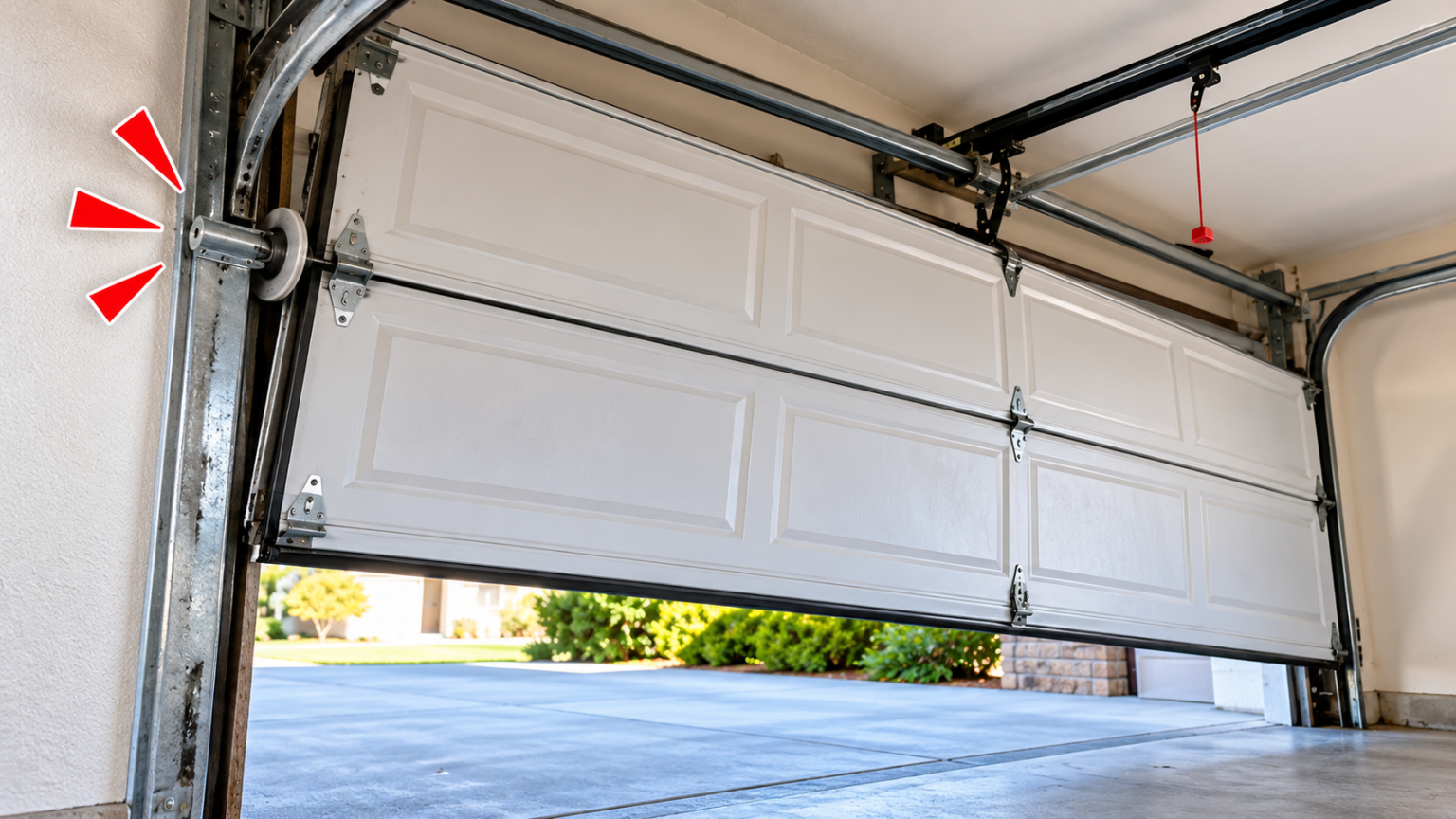
Having a garage door malfunction is not only a technical issue but a potentially dangerous situation as the door might keep moving after one or more rollers have come off the track. You may notice that the door is tilted, hanging down on one side or grinding as it moves, or not functioning at all.
In some cases, a garage door wheel off track is easy to spot. In others, the problem starts with a worn roller, damaged cable, bent track, or another component that is harder to see.
The U.S. Consumer Product Safety Commission cautions about the need to remember that garage doors pose entrapment risks where only qualified service specialists should work on cables, spring devices, and other hardware as they perform garage door repair. Automatic residential garage door operators are also subject to the federal safety standard imposed by 16 CFR Part 1211.
Thus, anytime you notice any issues with your garage door, stop using it immediately for safety reasons and schedule an inspection.
What does a “Garage Door Off Track” mean?
When a garage door is off-track, it is because one or more of its rollers have come out of their metal tracks that guides and regulate the garage door as it opens and closes.
The rollers on a sectional garage door are usually located along the two sides of the door and move through vertical and horizontal tracks, lifting the sections from the floor to the overhead position.
Once a roller goes out of track, it causes the door to become crooked or to bind against the other hardware, thus changing the load distribution on the door.
This is where “garage door came off track” should never be considered just an alignment issue. What is actually seen may be a roller, while the source of the issue may lie elsewhere.
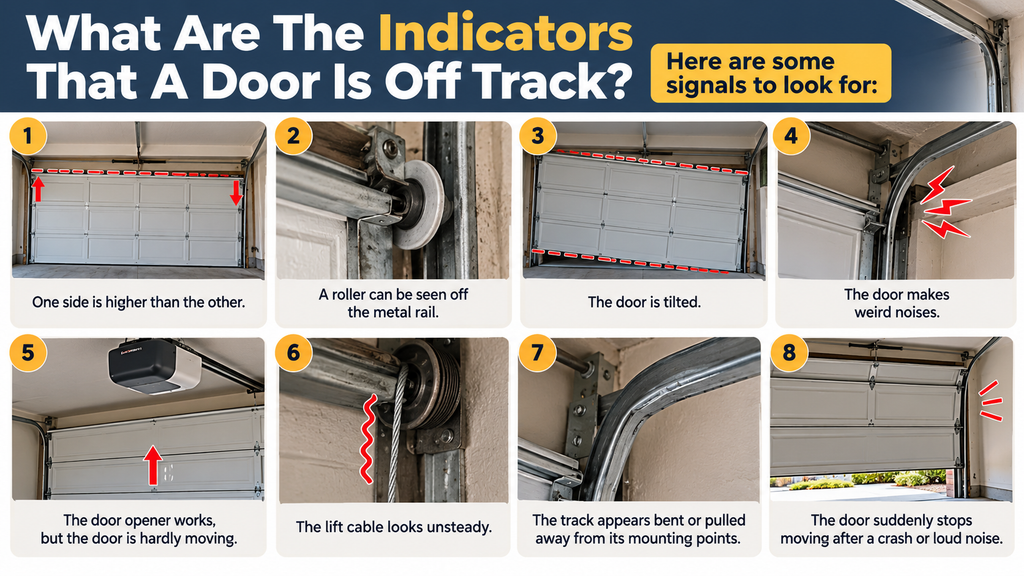
What Are The Indicators That A Door Is Off Track?
Here are some signals to look for:
– One side is higher than the other.
– A roller can be seen off the metal rail.
– The door is tilted.
– The door makes weird noises.
– The door opener works, but the door is hardly moving.
– The lift cable looks unsteady.
– The track appears bent or pulled away from its mounting points.
– The door suddenly stops moving after a crash or loud noise.
Why Is It Necessary to Stop Using an Off-Track Garage Door?
You must stop using your garage door since it no longer moving through the guidance system it was designed to use.
Pressing the remote or wall button does not make the opener understand that the door is off track. Therefore, the opener will continue trying to move the garage door even if the door rollers, panels, cables, and tracks are subjected to unusual loads, and this could lead to relatively minor issues evolving into more problems.
Continuing to Operate It Can Make the Damage Worse
Repeated operation can possibly lead to:
– Additional rollers being pulled off the track
– A bent or damaged track
– Tension on hinges and sections of the door
– Damaged lift cables
-Cause the door to become more crooked
– Strain on the garage door opener
– Movement or falling of the door unexpectedly
Similarly, garage door maintenance guides suggest homeowners should never push the door when it is not functioning properly since garage doors can be hazardous if they are not maintained correctly.
The important point is that the opener is not a repair tool. If the door has come off the track, repeatedly pressing the button is unlikely to solve the underlying problem.
What Causes a Garage Door to Come Off the Track?
1. The Rollers Are Worn or Broken
Garage door rollers continuously move whenever the garage door is operated. As years passes by, rollers can get worn, damaged, or stuck.
If a roller becomes damaged, it either wobbles or fails to remain in the right position when inside the track. As a result, it may come off the track entirely.
This is why it is advisable to treat a garage door off the track scenario as a sign instead of concluding that the rollers are the only culprits.
2. The Track Is Bent or Misaligned
A track can get bent due to an impact such as a vehicle hitting the garage door or track, and even a small alignment issue can disrupt the roller’s path.
Loose or changed mounting components can have an effect on the alignment of the track. It is important that a professional should determine whether the track can be safely realigned or whether damaged components need replacement.
3. A Cable Has Slipped or Broken
Lift cables are necessary in transmitting the lift force of the spring system to the door.
When the cable slips or breaks, one side of the door will be lower than the other side. The result of this is that the rollers will not work properly anymore. This is very significant to note because cables are attached to the spring system. According to the CPSC safety guidelines, qualified personnel should perform repairs involving cables, springs, and other elements of the garage door.
4. The Door Was Hit
An impact is one more reason that a door could be off track.
Accidents involving a vehicle, object, or an impact, could bend the track, change mounting hardware, or deform a door section. However, the door may still work for some time after the incident before the roller starts slipping out of the track.
If an impact caused the problem, don’t assume that putting the roller back is enough. The affected track and door components should be inspected.
5. Hardware Has Gone Loose or Broken
To operate, the door hinges, brackets, rollers, and tracks are all working together. So, if one of these parts becomes loose or gets damaged, the door may get misaligned over time. Thus, it will lead to an off track garage door even when the effect is not easily identifiable.
What Should You Do If The Garage Door Goes Off Track?
Step 1: Refrain From Using The Opener
It is not advisable to push the button on the remote, wall control, or the keypad in an attempt to test the door.
If the opener has already been used and the door is stuck, don’t keep trying different controls.
The goal here is to avoid any further movement of the door until the problem is properly assessed.
Step 2: Keep People and Vehicles Away
Ensure that individuals and vehicles remain out of the vicinity of the garage door.
Avoid being underneath the garage door while it is open or when it seems to be bent or broken.
If the garage door blocks your way or blocks a vehicle, do not attempt to move the garage door in order to clear the way.
Step 3: Don’t Pull or Adjust Cables and Springs
Do not attempt to loosen, reconnect, cut, stretch, or adjust garage door cables or springs.
These components are part of the door’s counterbalance system and can release stored energy if handled incorrectly.
Weak or broken springs can cause the door to fall fast thus it is recommended by the CPSC safety that such repairs should be done only by a professional who have experience with spring assembly and cables.
Stage 4: Avoid Forcing the Door Back Into Place
You might want to push the roller back into the track or raise the door to get it back in place. However, this could put your safety at risk, especially if the door is unbalanced.
A professional garage door off track services begin by identifying how the door has come off and inspecting the rollers, tracks, cables, hinges, brackets, panels, and balancing system.
Step 5: Schedule Professional Inspection
Explain to the technician what happened:
-A vehicle struck the door
-You heard a very loud bang
-One of the rollers was visible from outside the door
-The door was bent out of shape
-A cable looks loose
-The opener was running when the problem occurred
-The door stopped while opening or closing
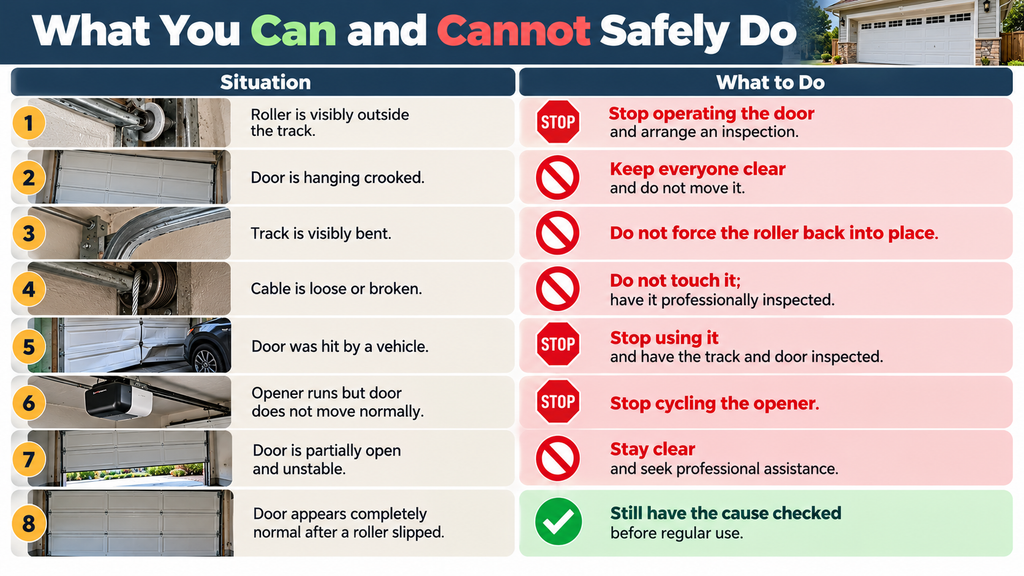
What You Can and Cannot Safely Do
| Situation | What to Do |
| Roller is visibly outside the track | Stop operating the door and arrange an inspection |
| Door is hanging crooked | Keep everyone clear and do not move it |
| Track is visibly bent | Do not force the roller back into place |
| Cable is loose or broken | Do not touch it; have it professionally inspected |
| Door was hit by a vehicle | Stop using it and have the track and door inspected |
| Opener runs but door does not move normally | Stop cycling the opener |
| Door is partially open and unstable | Stay clear and seek professional assistance |
| Door appears completely normal after a roller slipped | Still have the cause checked before regular use |
Is It Possible to Fix a Garage Door Off Track on Your Own?
For the majority of homeowners, fixing a garage door off track isn’t a good project for a DIY task.
To begin with, there’s the door’s weight to consider. A door that is off track could involve any cables, springs, brackets and rollers, among other components that may be carrying an abnormal load.
Many articles on the Internet provide directions on how to reposition rollers manually. However, it can be challenging for the average homeowner to identify whether their door has a broken cable, a malfunctioned spring, bent tracks or other issues by just a quick visual inspection.
For a safety-focused repair, the better approach is to avoid manipulating the door and have a trained garage door professional inspect it.
The CPSC has long treated garage door operator safety as a significant issue. Its current guidance confirms that automatic residential garage door operators are covered by a mandatory federal safety standard, while its safety materials emphasize proper balancing and professional repair of cables and spring assemblies.
What Happens During Professional Garage Door Off Track Repair?
Professional repairs begin with identifying the reason for the door coming off track.
To diagnose the problem, the technician may analyze:
– Rollers for wear, damage or displacement.
– Tracks for bends, gaps, and alignment issues.
– Track brackets for damage or movement.
– Cables for slack, damage or wrong positioning.
– Hinges and sections of the door for damage.
-Spring and counterbalance components for signs of failure.
-Opener operation after the door has been properly repaired.
The specific repair process will depend on the door’s condition. A roller failure will need a different solution than that of a misaligned track or broken cable.
The main point is that professional repair fixes the problem, rather than simply putting the visible component back.
Conclusion
When a garage door goes off track, it may seem like a minor concern at first, but it must not be ignored.
You can respond to the garage door off-track incident by stopping using the system, ensuring that no people or vehicles are in the vicinity of the door, and avoiding touching the garage door springs and cables. You need to contact a specialist and have the door inspected and repaired.
It is a mistake to think that the only issue with an off-track door is that its wheel must be pushed back in position. Other relevant factors can include broken rollers, bent tracks, dents, loose parts, cable issues, etc.
However, you shouldn’t seek a fast solution to the problem of a garage door being off track as this can lead to other safety issues. When a garage door is no longer moving the way it should, stopping early is often the safest, and smartest next step.
Frequently Asked Questions
Is it safe to use a garage door that is off track?
No. An off-track garage door should not be operated with the opener or forced by hand. The door may be unstable and can place abnormal loads on rollers, cables, tracks, and other components. Keep people and vehicles clear and arrange for a professional inspection.
What should I do if my garage door wheel is off track?
Stop using the door and do not try to force the wheel back into place. A displaced wheel may be caused by a damaged roller, bent track, loose hardware, or another underlying problem. Have the door inspected before operating it again.
Can a garage door come off track because of a broken cable?
Yes. A damaged or broken lifting cable can cause one side of the door to drop or move unevenly. That can push rollers out of alignment and cause the door to come off its track. Because cables are part of a tensioned system, professional inspection is recommended.
Can I use the garage door opener if the door came off the track?
No. Do not repeatedly run the opener to test or reposition an off-track door. The opener may continue applying force while the door is moving abnormally, potentially causing additional damage or creating a dangerous situation.
Does an off-track garage door always need a new door?
No. An off-track problem does not automatically mean the entire garage door must be replaced. Depending on the cause, the repair may involve a roller, track, bracket, cable, hinge, or another component. A professional inspection can determine the extent of the damage.
Why does my garage door keep coming off the track?
Repeated derailment can indicate an unresolved problem such as worn rollers, track misalignment, damaged hardware, or a cable or balance-system issue. Simply putting the roller back may not solve the underlying cause. The complete system should be inspected.