
Summary
-Make sure to clear a way to your garage beforehand.
-Make notes about the garage door problem you have at home so that the technician diagnoses it with ease.
-Keep pets and children away from the workspace.
-Wait for proper inspection before any repairs commence.
-Qualified experts will discuss repair options before they start working.
-Most service visits will include final safety checks and tests after the repair process.
Scheduling an appointment with a garage door repair technician is often the quickest solution to fix a malfunctioning garage door. If your garage door is producing a loud sound, is not opening or closing properly, or has some problem with the opener, it’s helpful to know what will happen when the technician arrives.
It can be confusing for homeowners to think of how to get ready for the visit or what details are needed from the technician. However, there is no need to worry, following some simple instructions will allow the inspection process to run smoothly and enhance the technician’s ability to diagnose the problem.
This guide will outline what to expect from a service visit, how to prepare your house for a professional garage door repair and what the technician will do once he arrives. Understanding this process will give you a right idea of what to expect and make the repair visit successful, safe and effective.
What Do You Anticipate Prior to the Technicians Arrival?
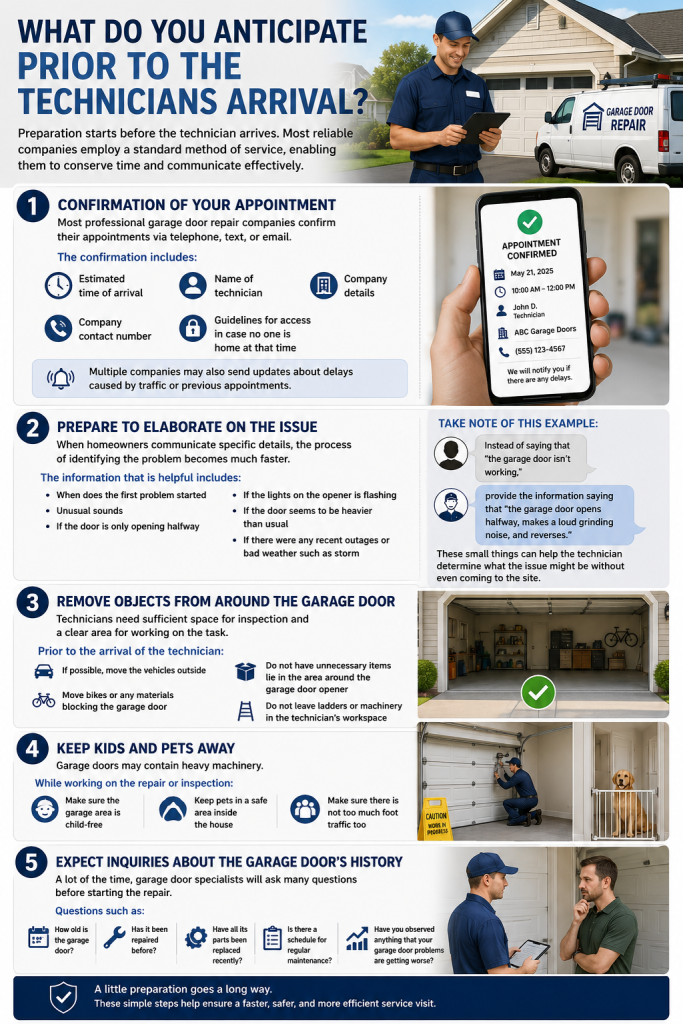
Preparation starts before the technician arrives. Most reliable companies employ a standard method of service, enabling them to conserve time and communicate effectively.
1. Confirmation of Your Appointment
Most professional garage door repair companies confirm their appointments via telephone, text, or email.
The confirmation includes:
-Estimated time of arrival
-Name of technician
-Company details
-Company contact number
-Guidelines for access in case no one is home at that time
-Multiple companies may also send updates about delays caused by traffic or previous appointments
2. Prepare to Elaborate on the Issue
When homeowners communicate specific details, the process of identifying the problem becomes much faster.
The information that is helpful includes:
-When does the first problem started
-Unusual sounds
-If the door is only opening halfway
-If the lights on the opener is flashing
-If the door seems to be heavier than usual
-If there were any recent outages or bad weather such as storm
Take note of this example:
Instead of saying that “the garage door isn’t working,” provide the information saying that “the garage door opens halfway, makes a loud grinding noise, and reverses.”
These small things can help the technician determine what the issue might be without even coming to the site.
3. Remove Objects From Around the Garage Door
Technicians need sufficient space for inspection and a clear area for working on the task.
Prior to the arrival of the technician:
-If possible, move the vehicles outside
-Move bikes or any materials blocking the garage door
-Do not have unnecessary items lie in the area around the garage door opener
-Do not leave ladders or machinery in the technician’s workspace
4. Keep Kids and Pets Away
Garage doors may contain heavy machinery.
While working on the repair or inspection:
-Make sure the garage area is child-free
-Keep pets in a safe area inside the house
-Make sure there is not too much foot traffic too
5. Expect Inquiries About the Garage Door’s History
A lot of the time, garage door specialists will ask many questions before starting the repair.
Questions such as:
-How old is the garage door?
-Has it been repaired before?
-Have all its parts been replaced recently?
-Is there a schedule for regular maintenance?
-Have you observed anything that your garage door problems are getting worse?
What is the First Thing that a Garage Door Repair Technician Inspects?
If you thought that a technician would just start replacing defective components of your door, you are mistaken.
Instead, they need to perform a thorough inspection of your garage door and its components. This is why a complete inspection is crucial to ensure that the visible problem is not masking another underlying issue of your garage door.
A routine inspection involves the following components:
-Garage door springs
-Cables
-Rollers
-Tracks
-Hinges
-Drums
-Bearings
-Safety sensors
-Garage door opener
-Remote
-Wall button
-Door balance
-Weather seals
What Information Do You Need to Prepare?
Prior to the arrival of the technician, make sure to gather any information that you may already have. While this may be helpful, do not fret if you do not have all of the information necessary to facilitate the technician’s assessment. Highly experienced technicians will generally know how to identify most types of equipment during the inspection.
Helpful information includes:
| Information | Why It Helps |
| Garage door brand | Identifies compatible replacement parts |
| Opener model | Helps troubleshoot opener issues |
| Approximate installation date | Indicates expected wear |
| Warranty paperwork | May reduce repair costs |
| Previous repair records | Shows recurring issues |
Will Repairs Begin Right Away?
In most instances, yes, but depending on the nature of the problem.
The technician may carry out repair work such as:
-Replacing the rollers
-Adjusting the sensors
-Replacing the weather seals
-Aligning the tracks
-Tightening hardware
However, specialized parts or custom products will have to be ordered.
The technician should explain:
-The problem that needs to be fixed
-The solutions available for the repair
-The expected duration of the repair
-The cost of the repair
What Questions Should Be Asked to the Technician?
How severe is the issue?
Knowing the severity of an issue can help one assess how urgent repairs are.
How urgent is the repair?
While there are problems that can be fixed later on, broken cables or springs must be repaired immediately since they constitute a safety hazard.
Which other components are facing wear issues?
It is common for many other components to be worn down at the same time.
Is there a way to make garage doors last longer?
Garage door specialists provide tips on the best maintenance and home inspections, but never promote any DIY repairs on garage doors that may lead to accidents.
Warning Signs Indicate the Need for Professional Help
Some signs should never be disregarded. Also, there are risks of injuries or further damages if the door is used while suffering from these issues.
-Loud snapping noises
-Worn-out springs
-Damaged cables
-Bent garage door panels
-The door falls down suddenly
-The door fails to remain open
-There is a burning odor from the opener
-Bent tracks
-The door vibrates strongly during operation
What Takes Place After the Repair?
The work of experts is not over after completing the repair.
Most of the time, experts conduct testing, which usually encompasses the following:
-The opening and closing of the door multiple times
-The checking of the door’s balance
-The confirmation of sensor functions
-Testing the function of the garage door opener
-Listening unusual sounds
Most professionals explain what has been performed and respond to the homeowner’s questions.
Common Misunderstandings Concerning Garage Door Service
“The technician will instantly identify the problem.”
In most cases, technicians cannot quickly diagnose an issue. Garage doors often feature several similar issues, so it is imperative to conduct a thorough inspection before making any recommendations.
“All repairs take a few minutes.”
While some repairs do occur quickly, others can require multiple repairs to a variety of components, special parts, or various safety assessments. Repairing damages becomes harder longer they are left unattended.
“If the garage door opens, everything is okay.”
Garage doors may keep working fine despite broken springs or wires that already need replacement.
Why It Is Important to Choose with Qualified Garage Door Repair Professionals
Garage doors belong to the largest moving elements in a house. Either repairing or replacing a new garage door to a professional technician is much better and safer than doing it on your own. Because these professionals does have an appropriate training and equipment to evaluate damages and make repairs safely.
Doing such dangerous repair work as fixing high tension springs or cables without any experience can cause severe accidents and even more property damage.
So, do not do repairs yourself and trust the job to specialists.
Conclusion
Preparation for the arrival of Garage Door Repair technicians is easy but very important. This includes clearing the area around the door, taking notes about the problem, and understanding the methods that the technician will use. All these steps help the specialist save time diagnosing and deciding on a proper solution.
A reliable garage door repair company will examine the garage door and explain to the customer what has been found, discuss repair alternatives with them, and do some safety tests once the repairs have been made. Thus, by knowing how the process is going on, the homeowner can get a better understanding of what to ask.
Frequently Asked Questions
How do I get ready for the arrival of the garage door repair technician?
Be sure to clear the area in the garage being worked on, relocate any vehicles, keep any children or pets out of the area, and make a list of what issues you have seen with the garage door. Having the warranty information is also recommended.
Do I need to be home while the work is being done?
Yes. Most companies will not work if no one is at home or the homeowner is unavailable.
How long does the inspection usually take?
Inspections generally take anywhere from 20 to 45 minutes depending on the complexity and the condition of the garage door system.
Is it possible for the technician to fix everything in one visit?
The technician may perform most of the repairs during the initial visit since common replacement parts are carried in a service vehicle. Some specialized parts or custom doors may require the technician to procure more materials from other sources before completing the job.
Can I operate my garage door if it’s making strange noises?
It is advisable to minimize usage until the issue is resolved. Strange sounds can imply worn or defective parts that may exacerbate the problem and create danger.